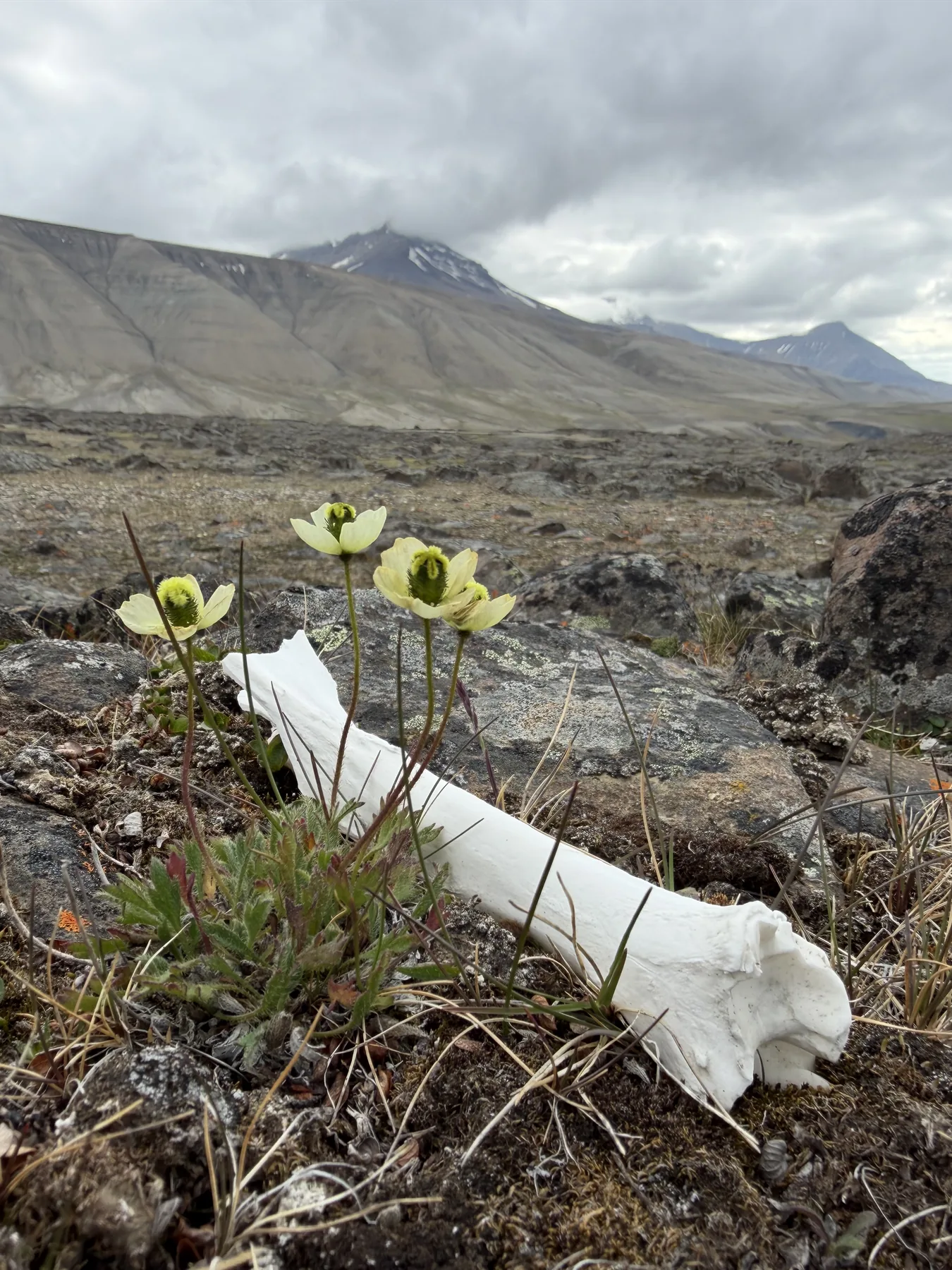
Plate 1 · Spitsbergen
A reindeer long bone and four Svalbard poppies share a single frost-sorted hollow. The bone has not decayed; it has bleached and stayed. The flowers did not replace it; they came up beside it, and have kept it company since.
Deferred Decomposition and the Involuntary Archive
Nothing here is still warm. Everything is still cold — which is a different, and stranger, tense.
This record includes photographs of animal remains, documented where they were found and left in place. Nothing in these images was collected, moved, or preserved — except the plastic.
Enter the FieldIn the summer of 2026 I walked the shorelines, tundra, and moraine of Svalbard, as far north as 81°36′, photographing what I found. What I found, again and again, were things that had not finished happening: a body halfway back to the ground and held there; a bone bleached and kept in the open for years; the world’s plastic filed into the same beach as the local dead.
In the Arctic the cold does not end things. It keeps them — the recent dead and the ancient dead, the local and the drifted-in, without discrimination, consent, or care. What follows is a record of that keeping: the involuntary archive, and the decision it forced in my hands — what to leave, and the one thing to lift out.
In temperate ground, a body is on its way out; the encounter has a deadline. Here it has none. The bone is not mid-passage. It has arrived at a bleached, odourless, permanent middle and stopped.
Plate 1 · Spitsbergen
A reindeer long bone and four Svalbard poppies share a single frost-sorted hollow. The bone has not decayed; it has bleached and stayed. The flowers did not replace it; they came up beside it, and have kept it company since.
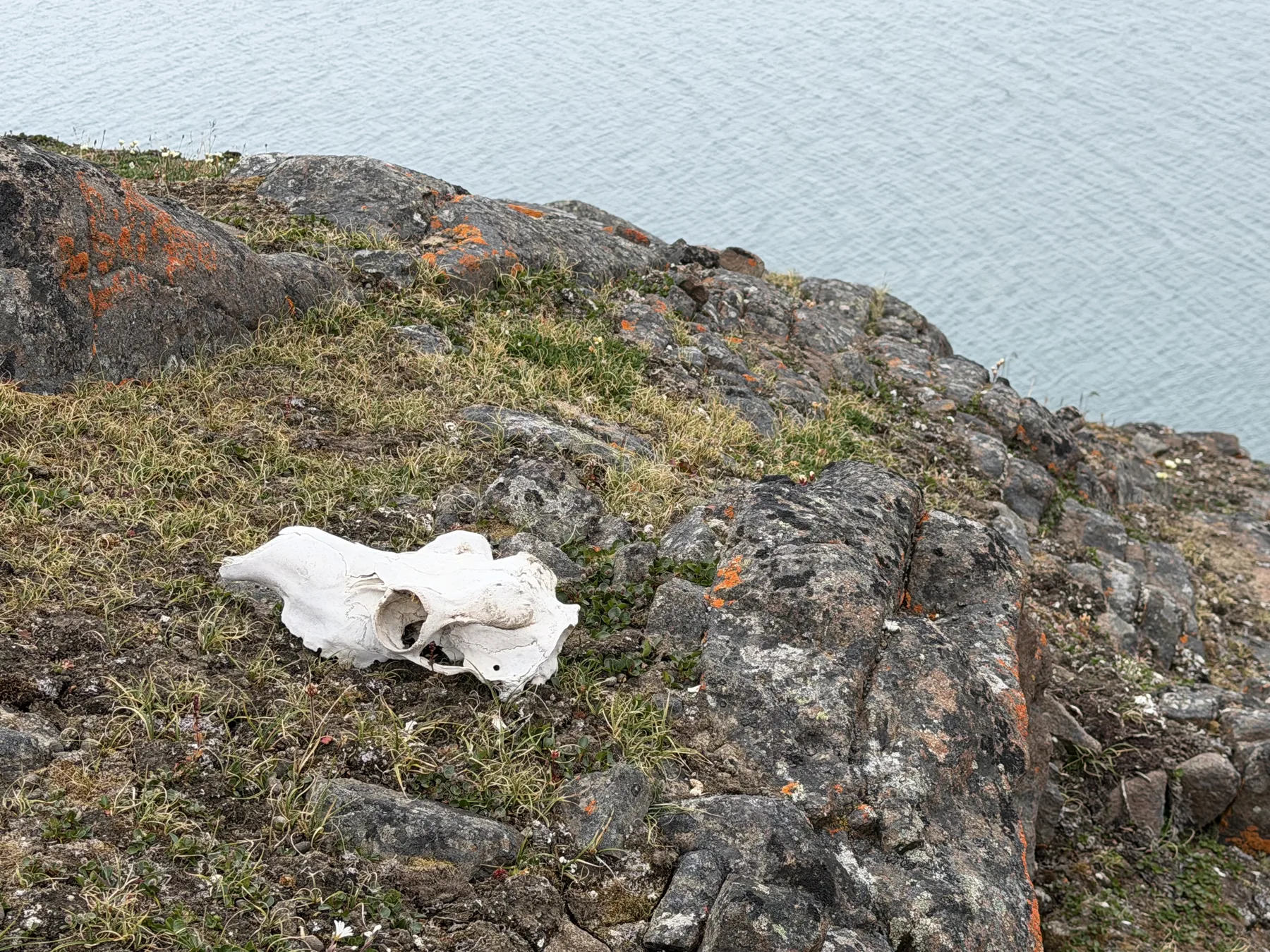
Plate 2 · Calypsobyen, Bellsund
A reindeer cranium on lichen-crusted rock above the sea. Nothing cleared it away — not scavenging, not burial, not rot. The cold kept it, in the open, and will keep it longer than I will be here to look.
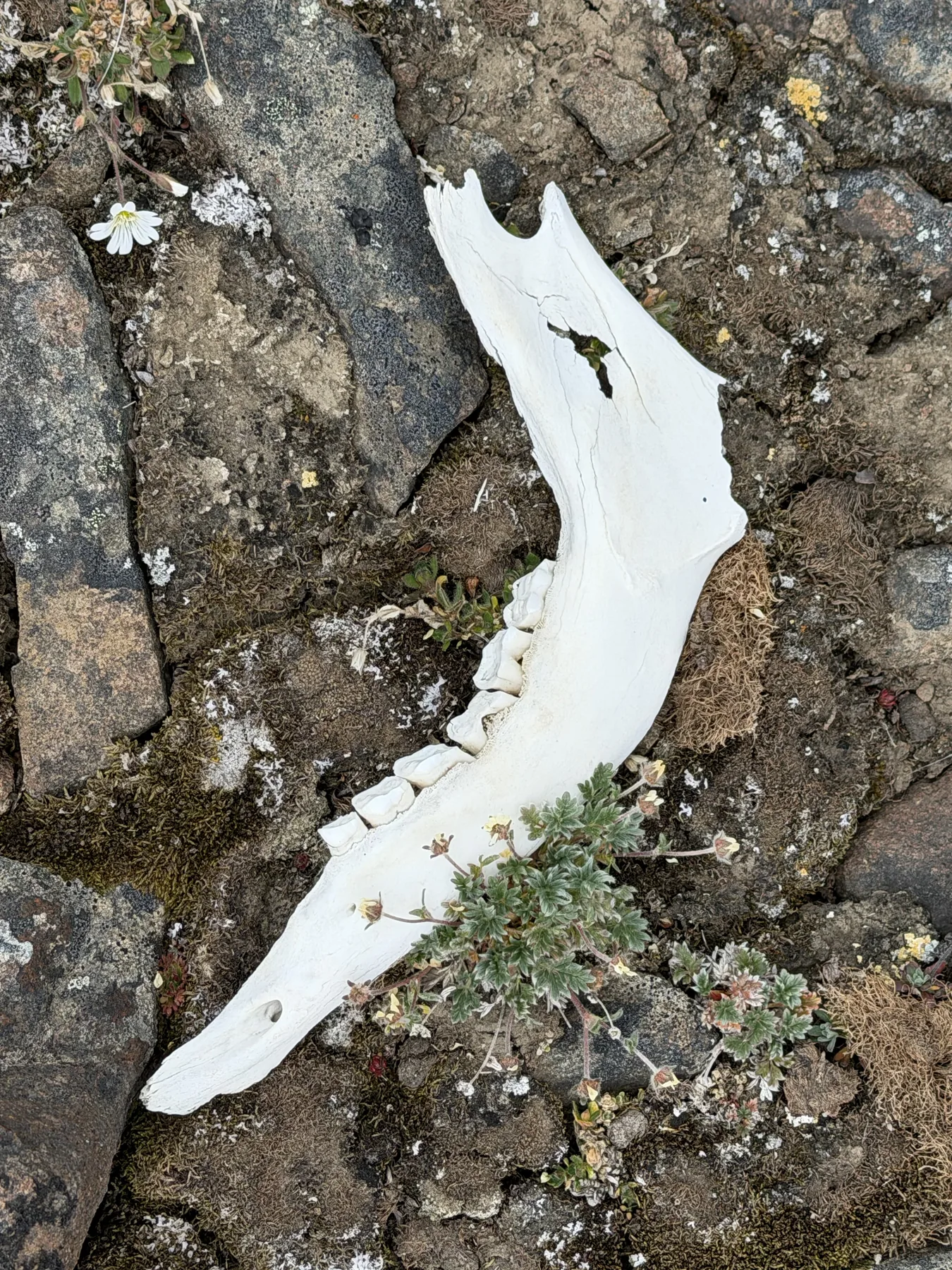
Plate 3 · Tundra
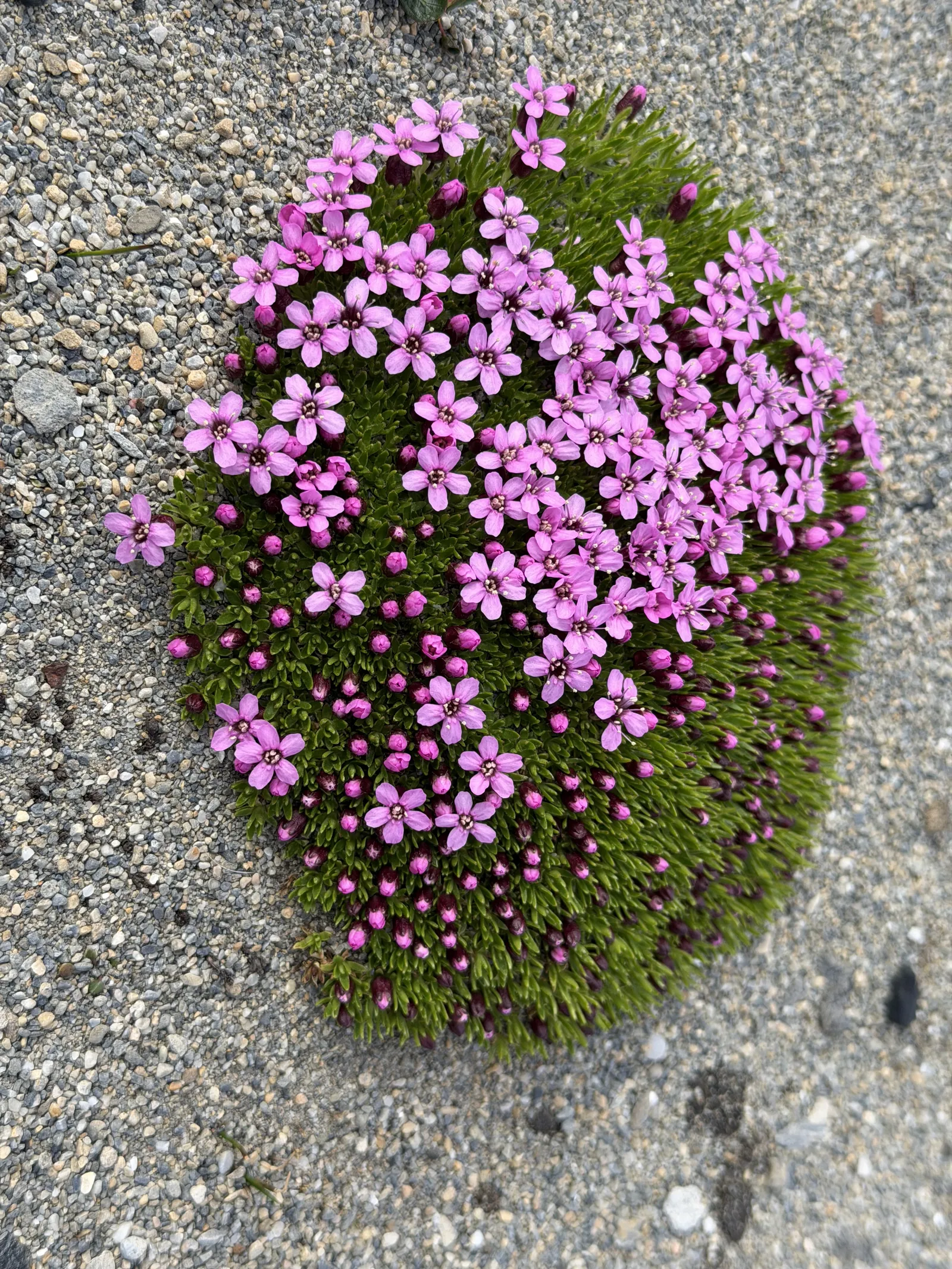
A reindeer jaw, its molars still seated, with a mountain avens grown up against the bone. Nothing here breaks the jaw down and turns it back to soil — the Arctic is too cold, and too slow, for that exchange. So the two just share the rock: the quick thing and the slow one, side by side.
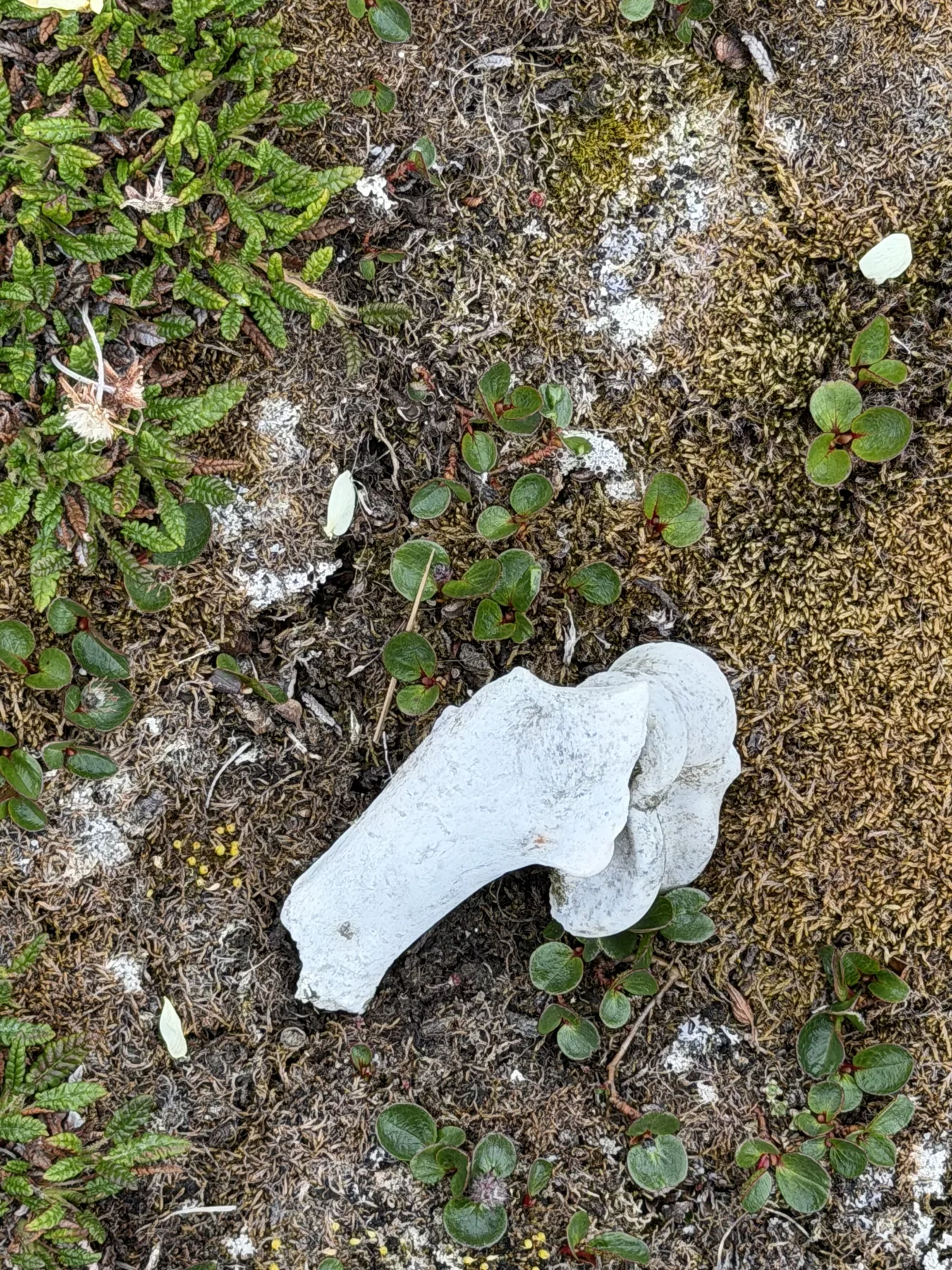
Plate 4 · Tundra
Bone bedded in polar willow (Salix polaris), the smallest tree in the northern hemisphere, grown flat to the ground. Two slow things, keeping each other company.
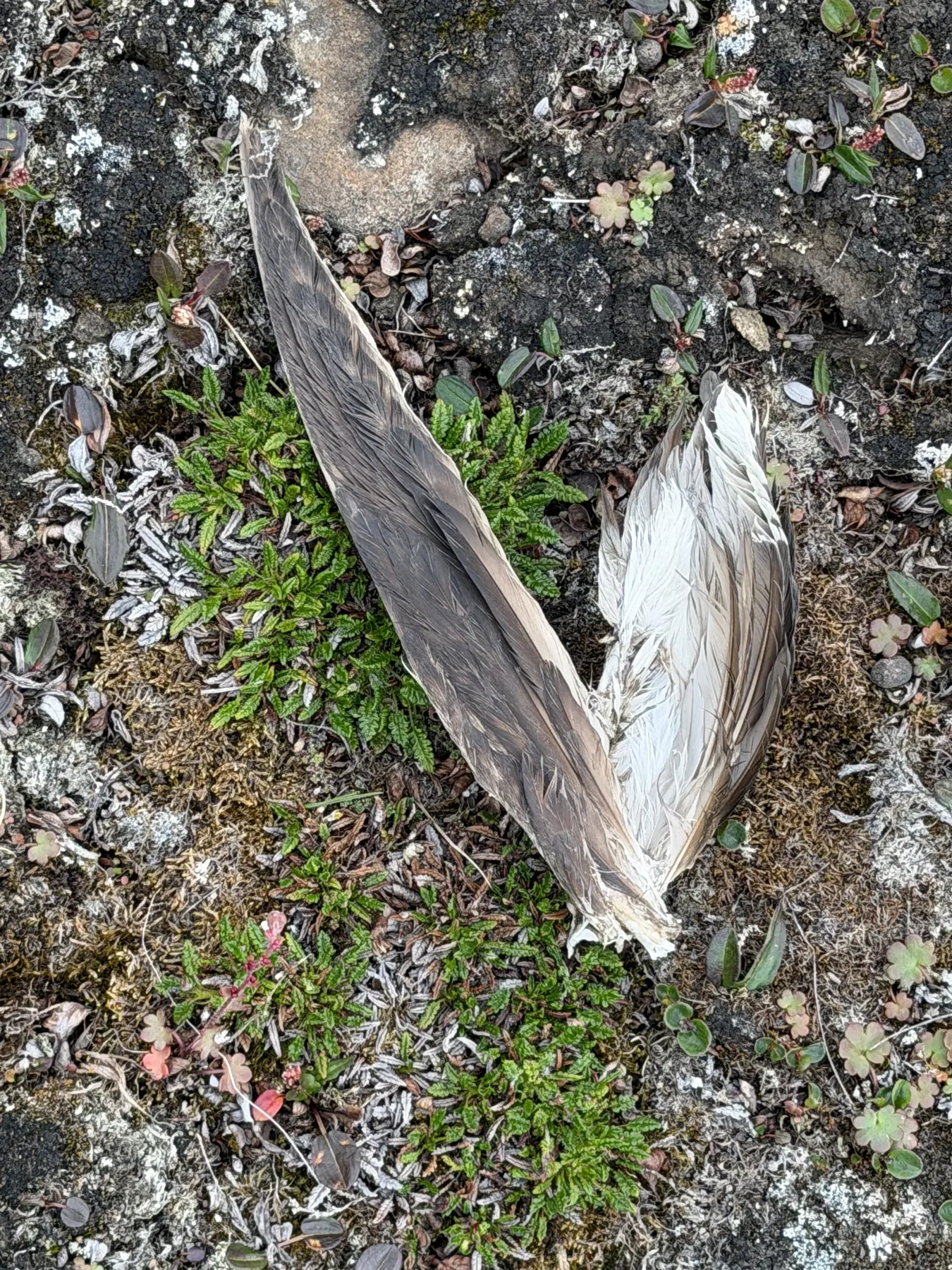
Plate 5 · Tundra
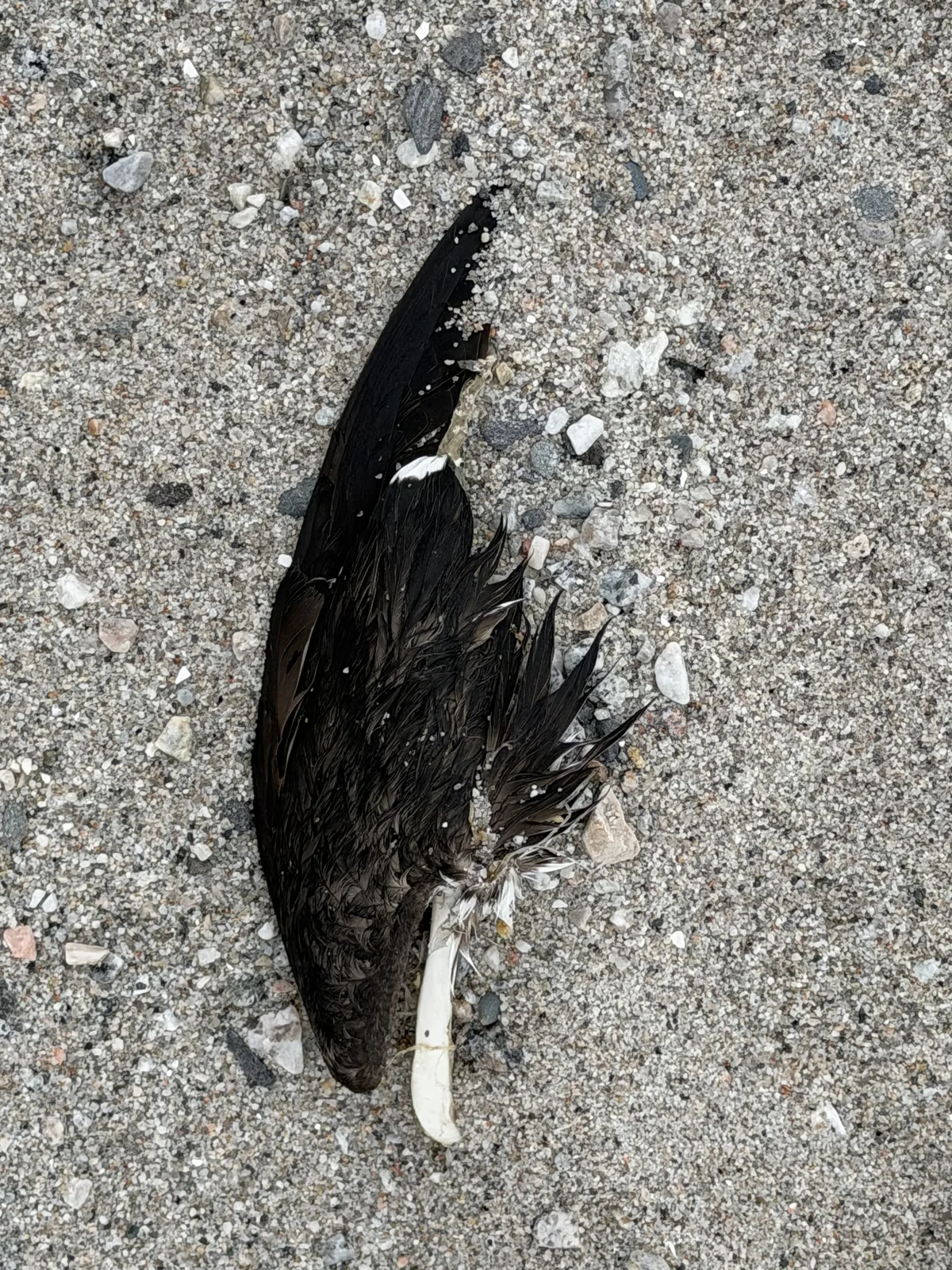
A bird’s wings, splayed on the moss, the rest of it gone. Decay arrested at a threshold and held there — in warmer ground this sight has a deadline; here it does not.
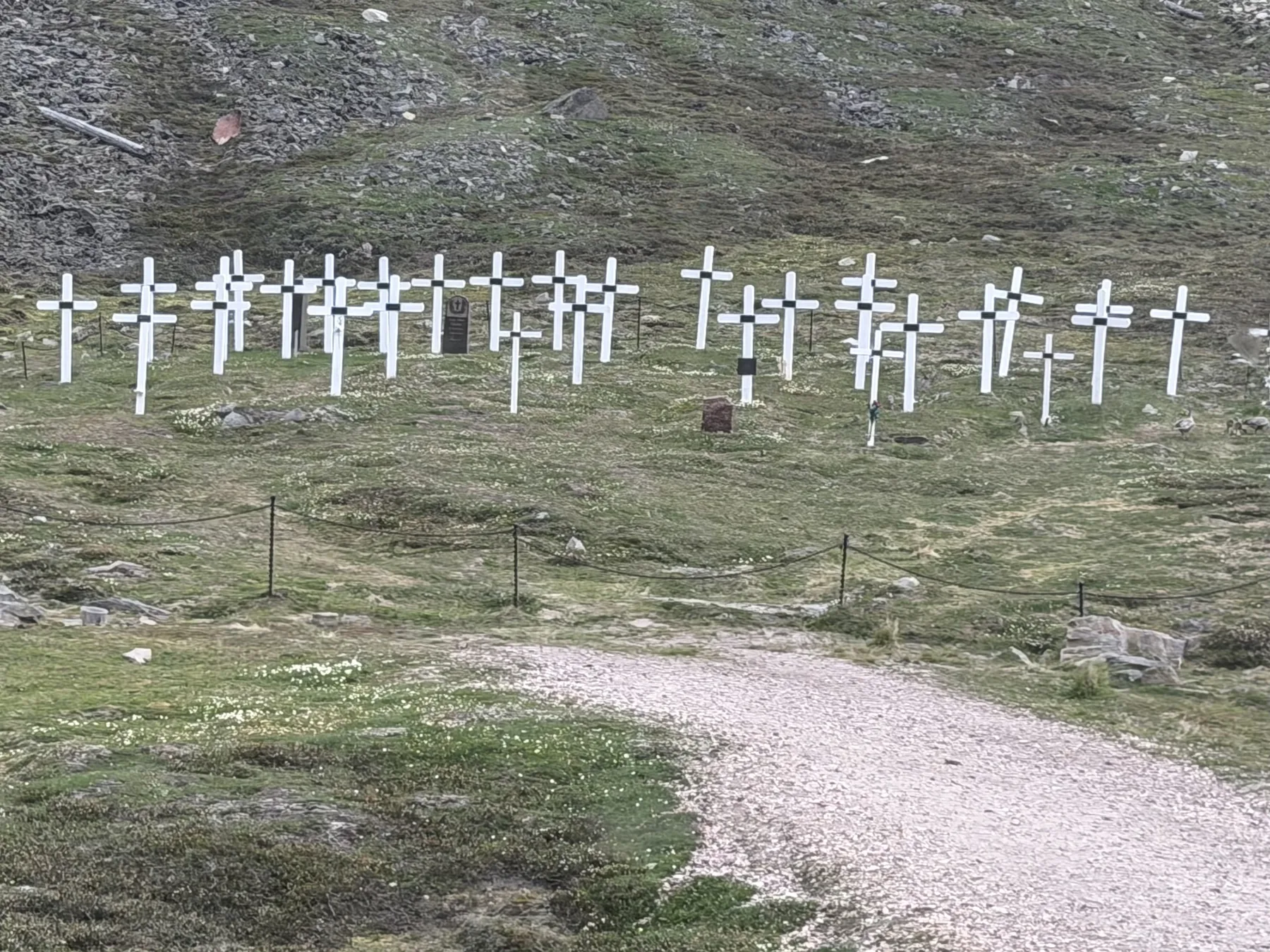
Plate 6 · Longyearbyen
The graveyard above the town, roped off and closed. Full burial ended here around 1950, when it was understood that the permafrost was not receiving the dead but slowly working them back toward the surface. An entire town where endings are not allowed to finish on site.
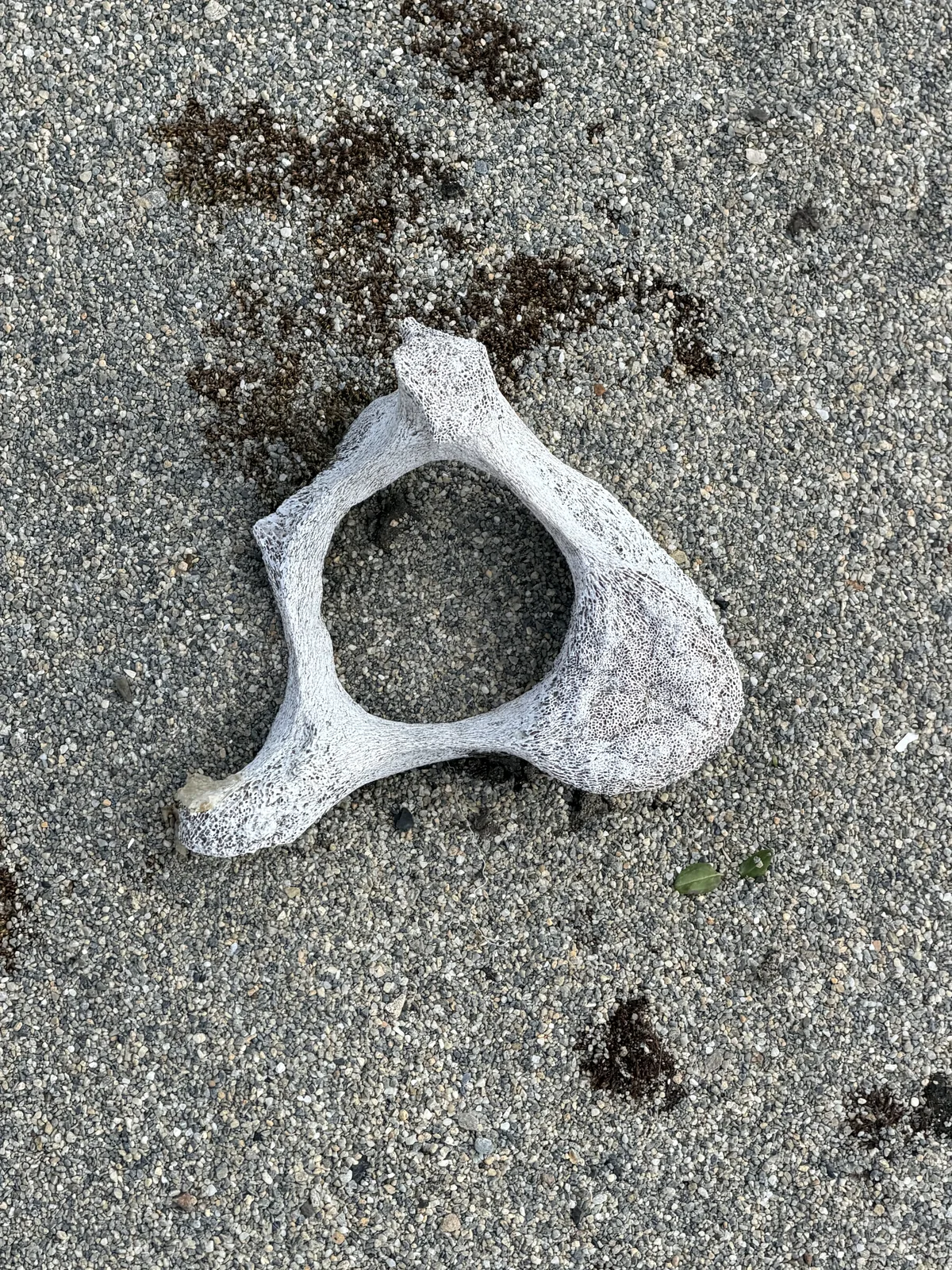
Plate 7 · Tundra
A single vertebra on the sand, bleached to the colour of the grit around it. No burial, no rot — just the ring of it, left open to the air and kept.
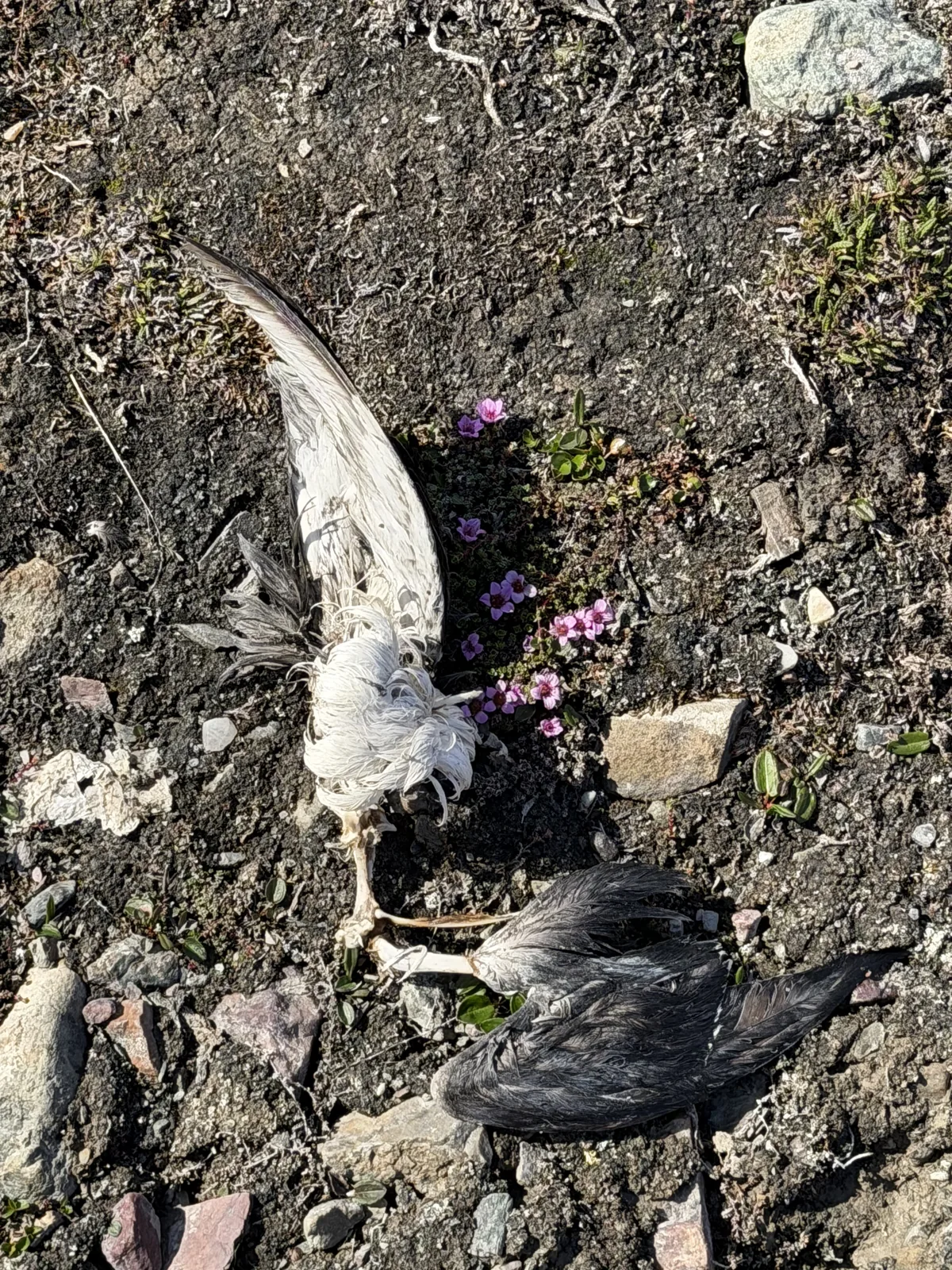
Plate 8 · Tundra
A wing, its bones still held together, and a flower grown up against them. Not consumed, not cleared — kept, and accompanied. The whole condition of the place, in a single frame.
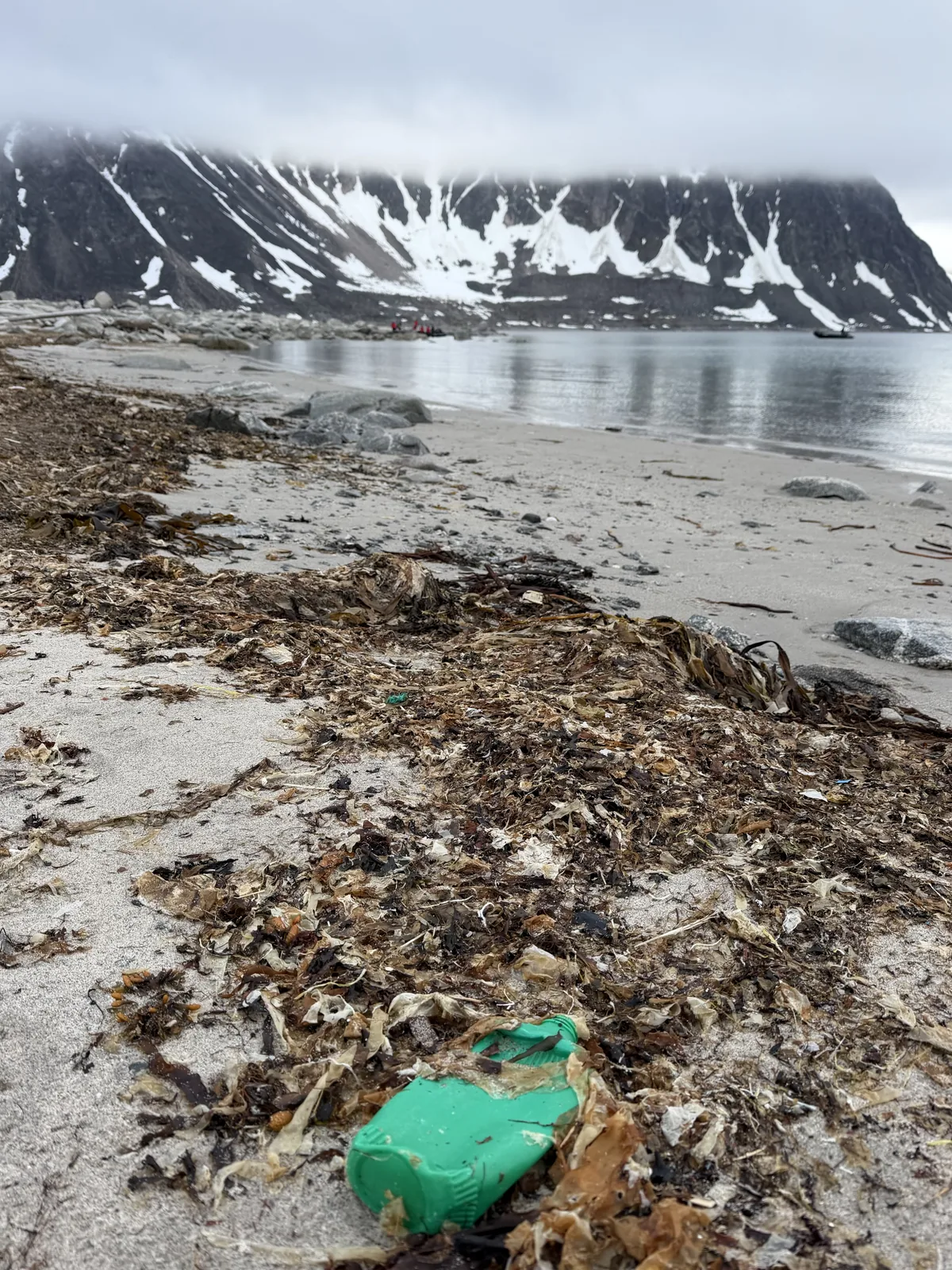
Svalbard is one of the emptiest places a person can stand, and among the most reliably littered. The same current that warms Europe carries the south’s discard up its flank and files it into the beach. The emptiness is real and the contamination is real, and they are the same place.
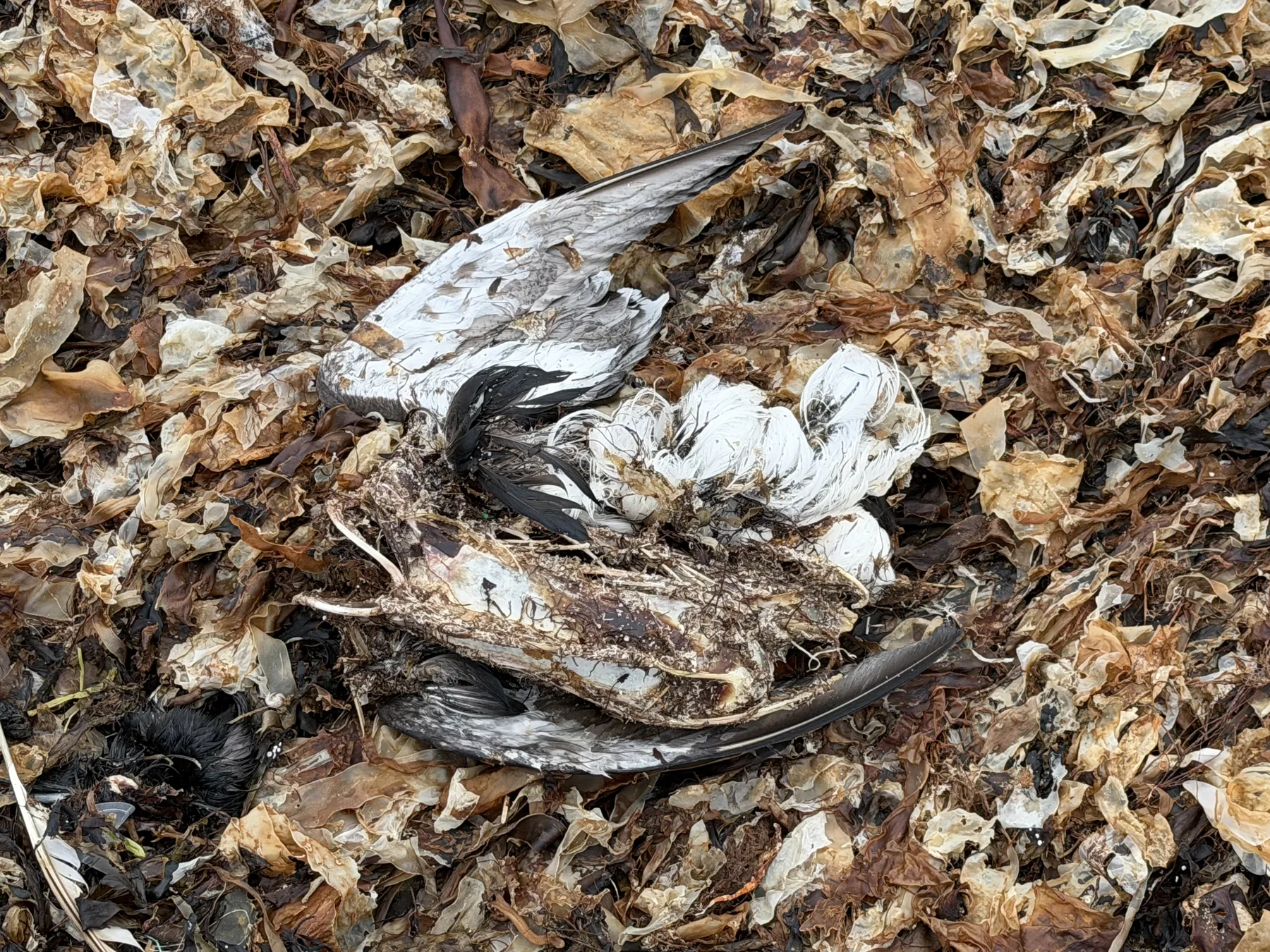
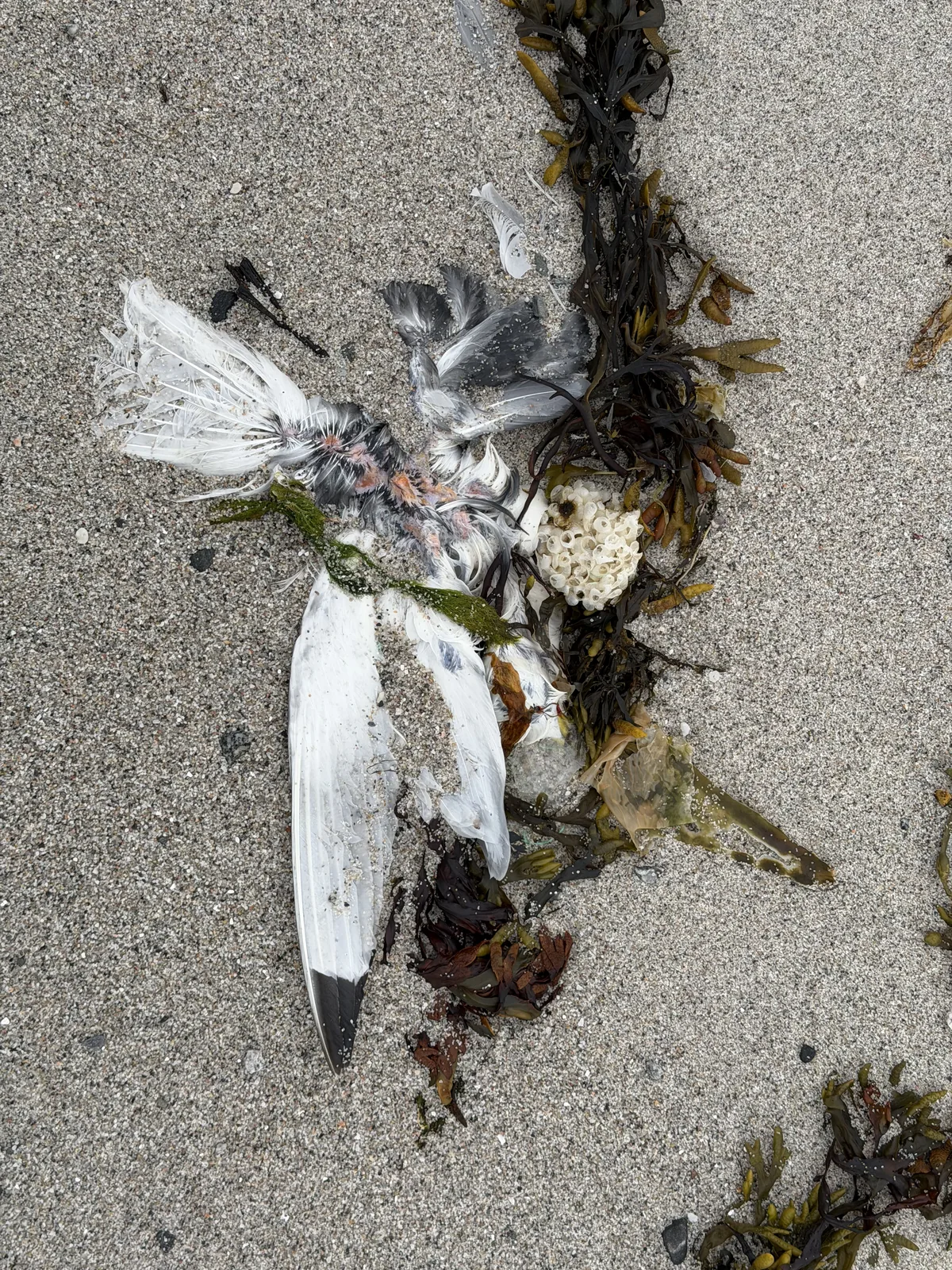
Plate 9 · Shoreline
A dead seabird in a wrack of kelp and shattered plastic, hard to tell apart at a glance. The tide files the local dead and the world’s discard into a single layer.
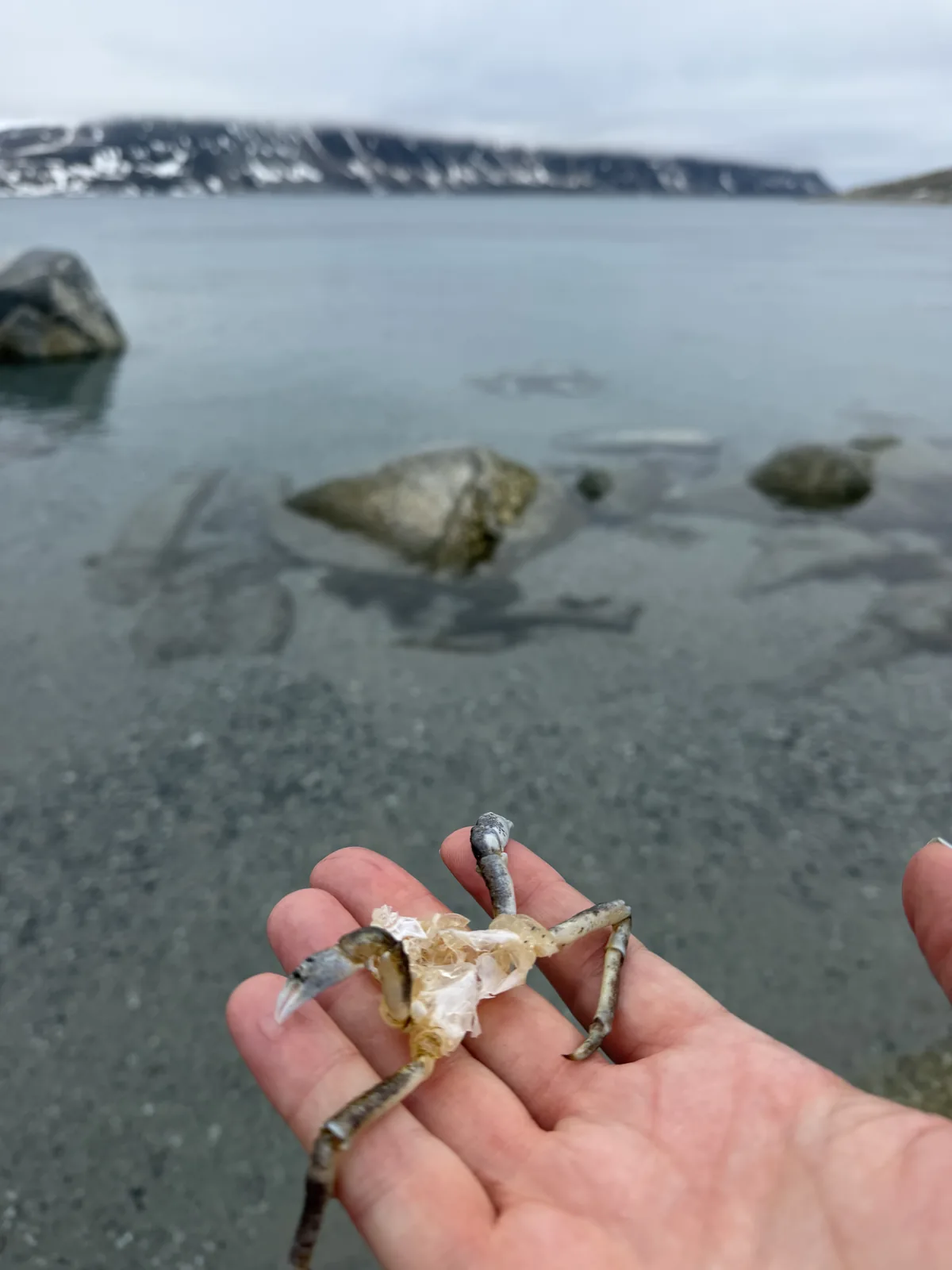
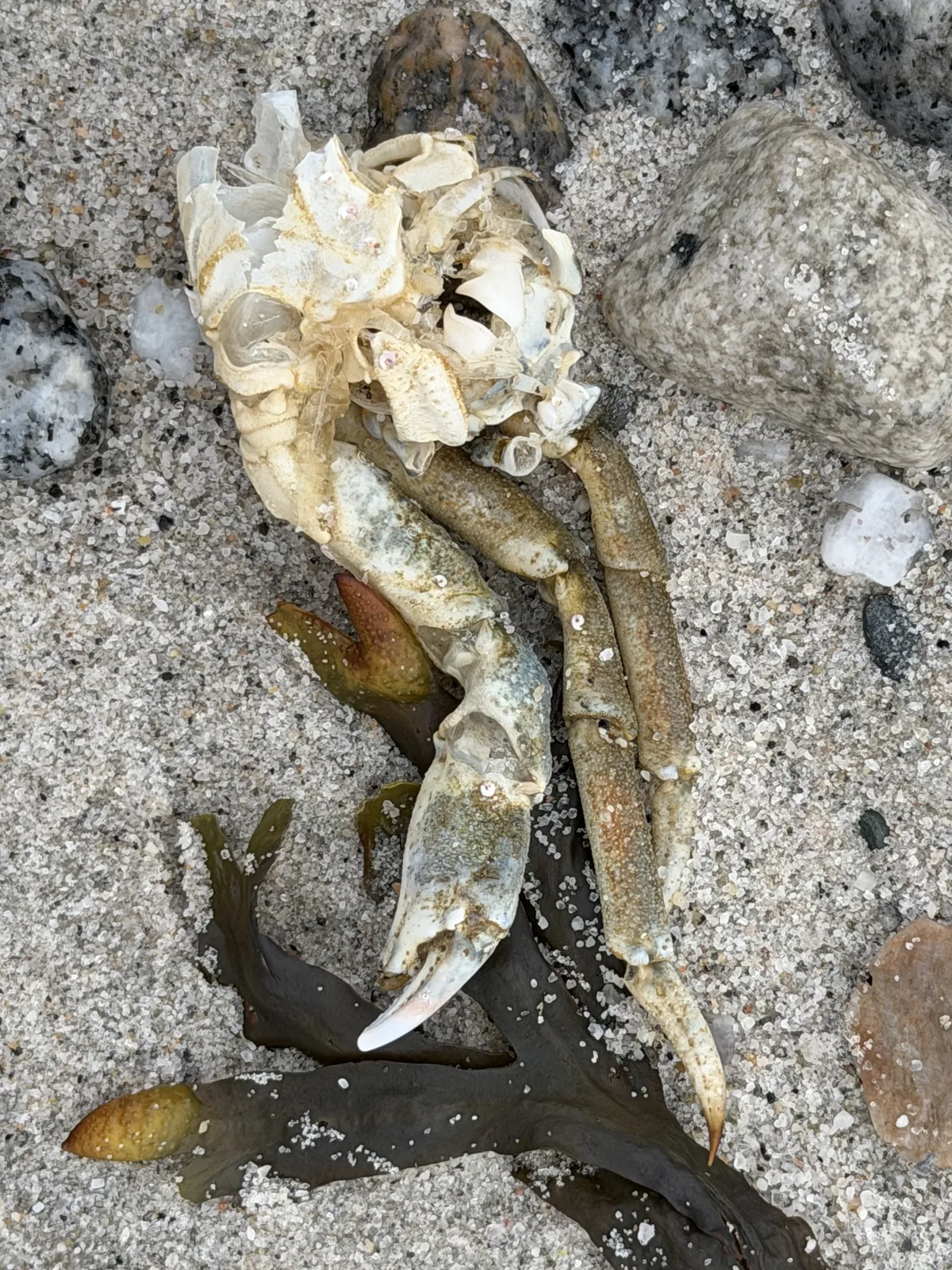
Plate 10 · Chermsideøya
What was left of a crab — a few legs and a single claw, most of the body gone — lifted from the shallows to be seen, then set back in the water it came in on. The discipline of this work is non-extractive: I witness and photograph what I find, and leave it where it lies. By this point I had documented well over a hundred remains and touched none of them. I did not take the crab — I set it back where it came from — but I had handled it, made it briefly mine in order to see it, and that alone was enough to make me ask, aloud and to no one, is that a problem? Witness is not always clean. It is only, at its best, awake to its own reach.
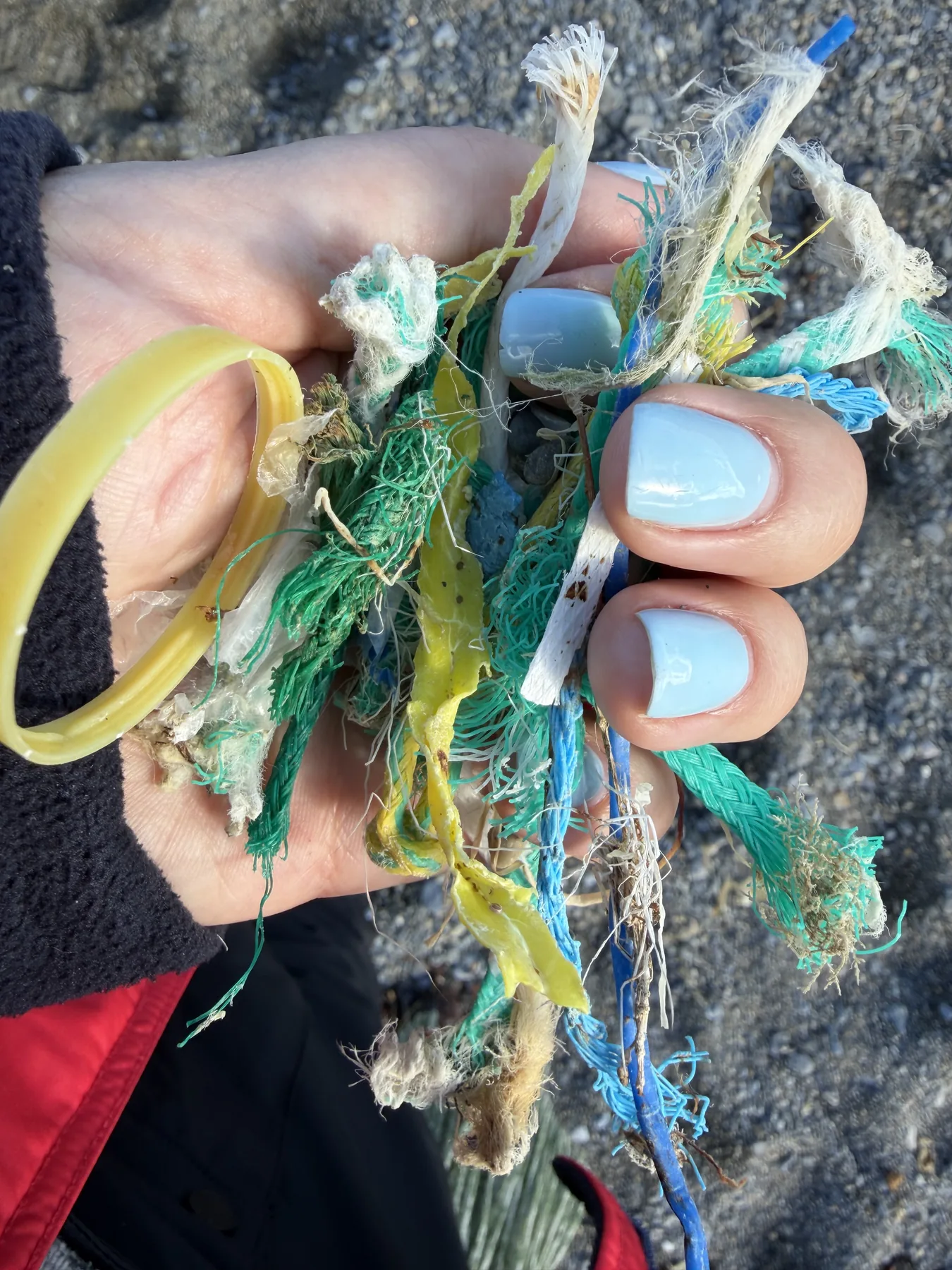
Plate 11 · The one thing taken
A fistful of the shoreline, lifted out: net, filament, a bottle ring, fibre in colours nothing here grows. This I took. Every bone, in every other frame, I left. The bone belongs to the cold that keeps it; the plastic is a violation lodged in it. What you leave and what you lift is the whole ethics.
The glacier is the largest and slowest archive of them all, and it defeated my instruments before it taught me anything. Its true size never reached me through a rangefinder’s numbers. It arrived only through the body — by climbing onto the ice, and being made small.
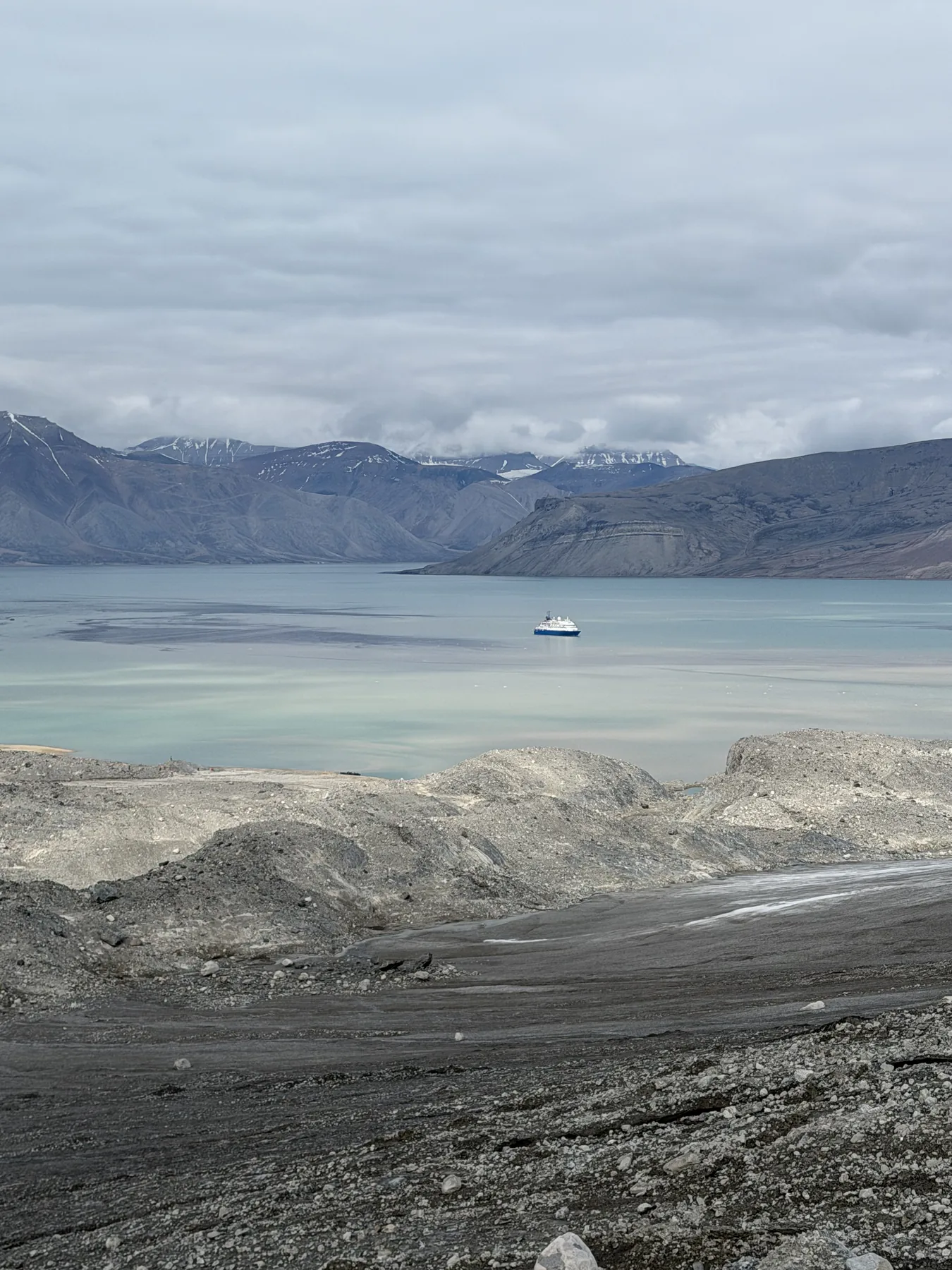
Plate 12 · Moraine
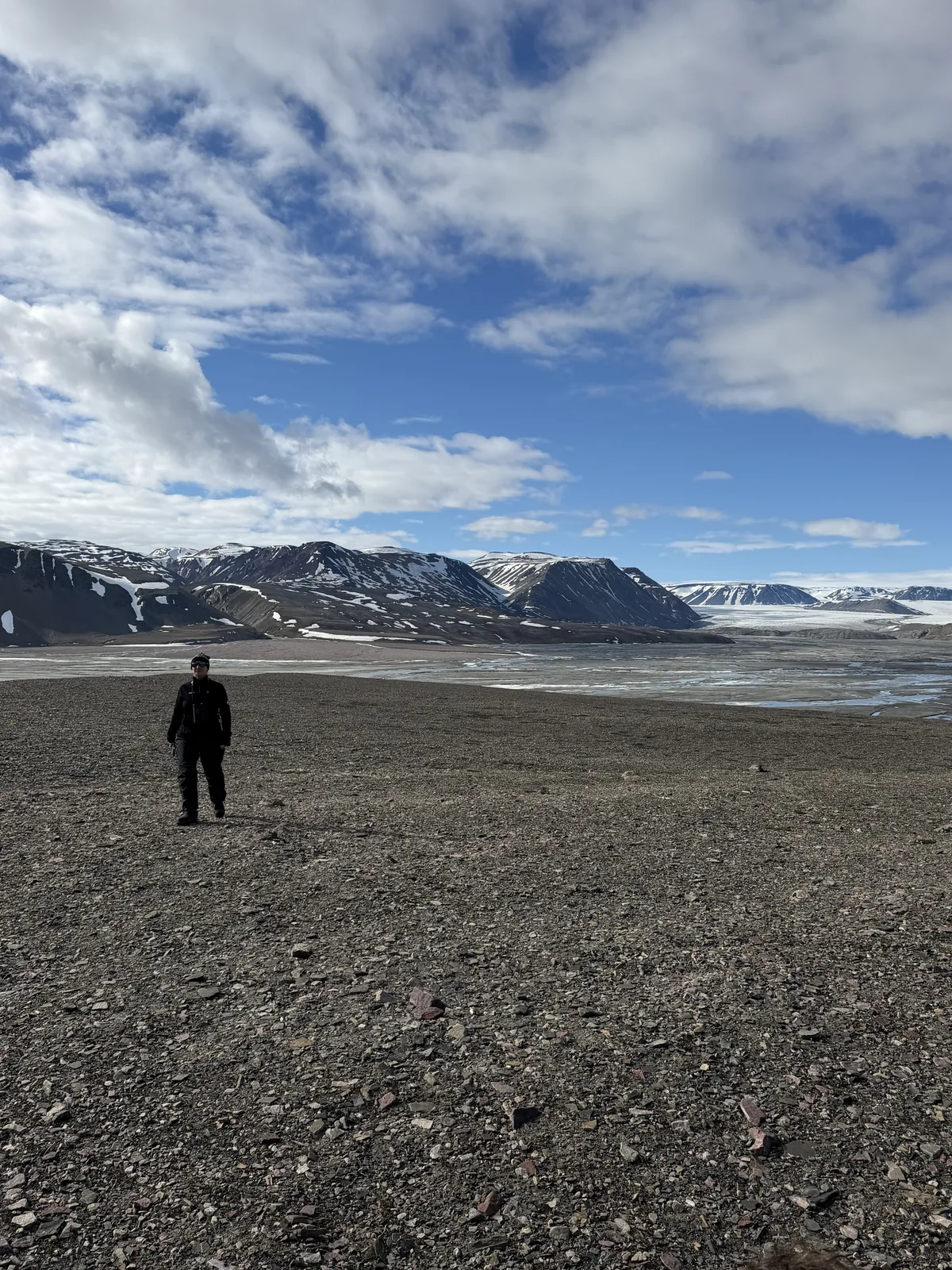
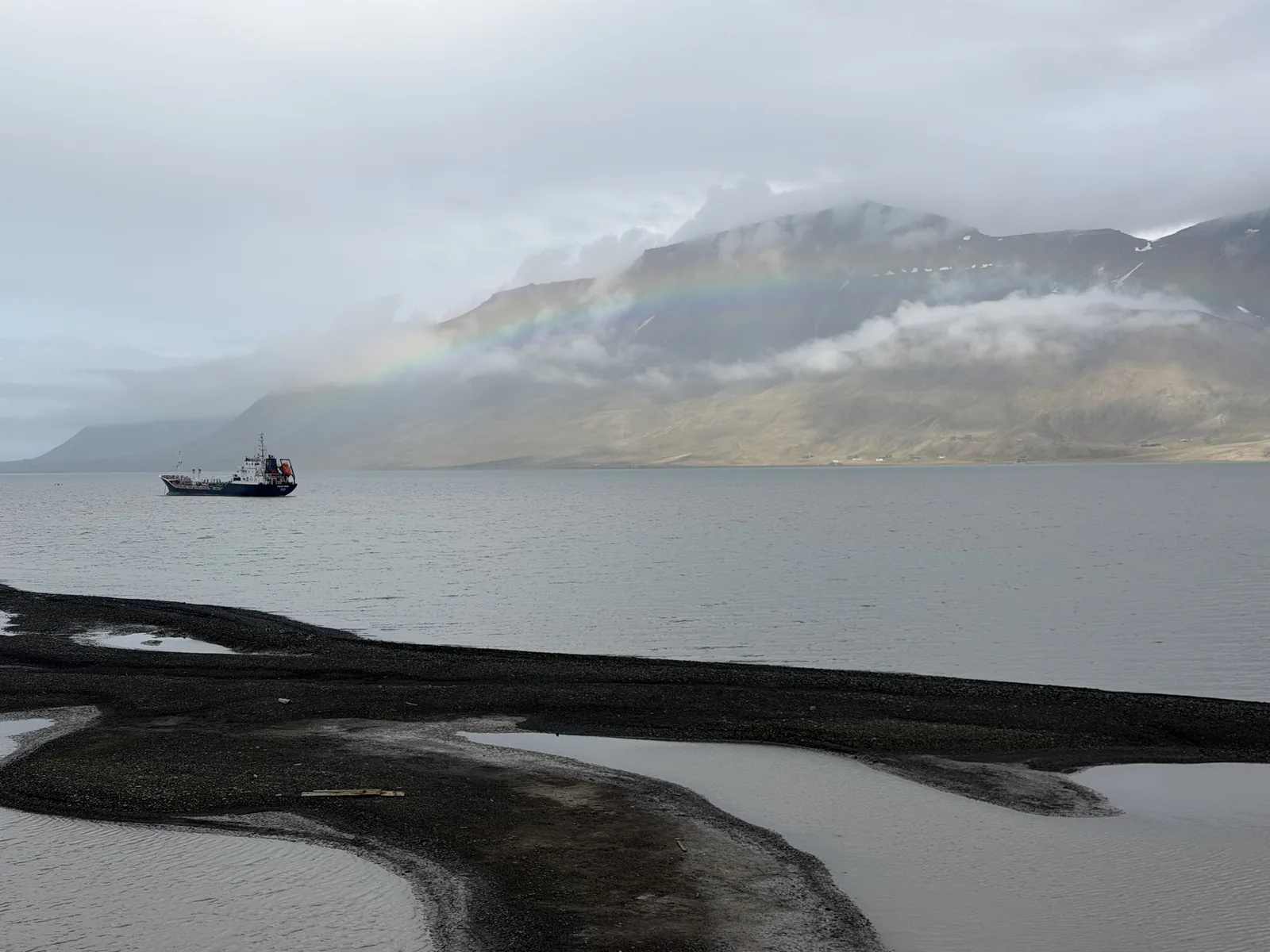
Moraine, a glacial-milk fjord, a ship at anchor for scale. The grey rubble is not the valley floor; it is the glacier’s own collection — everything the ice ground up and carried, filed in the order it was dropped.
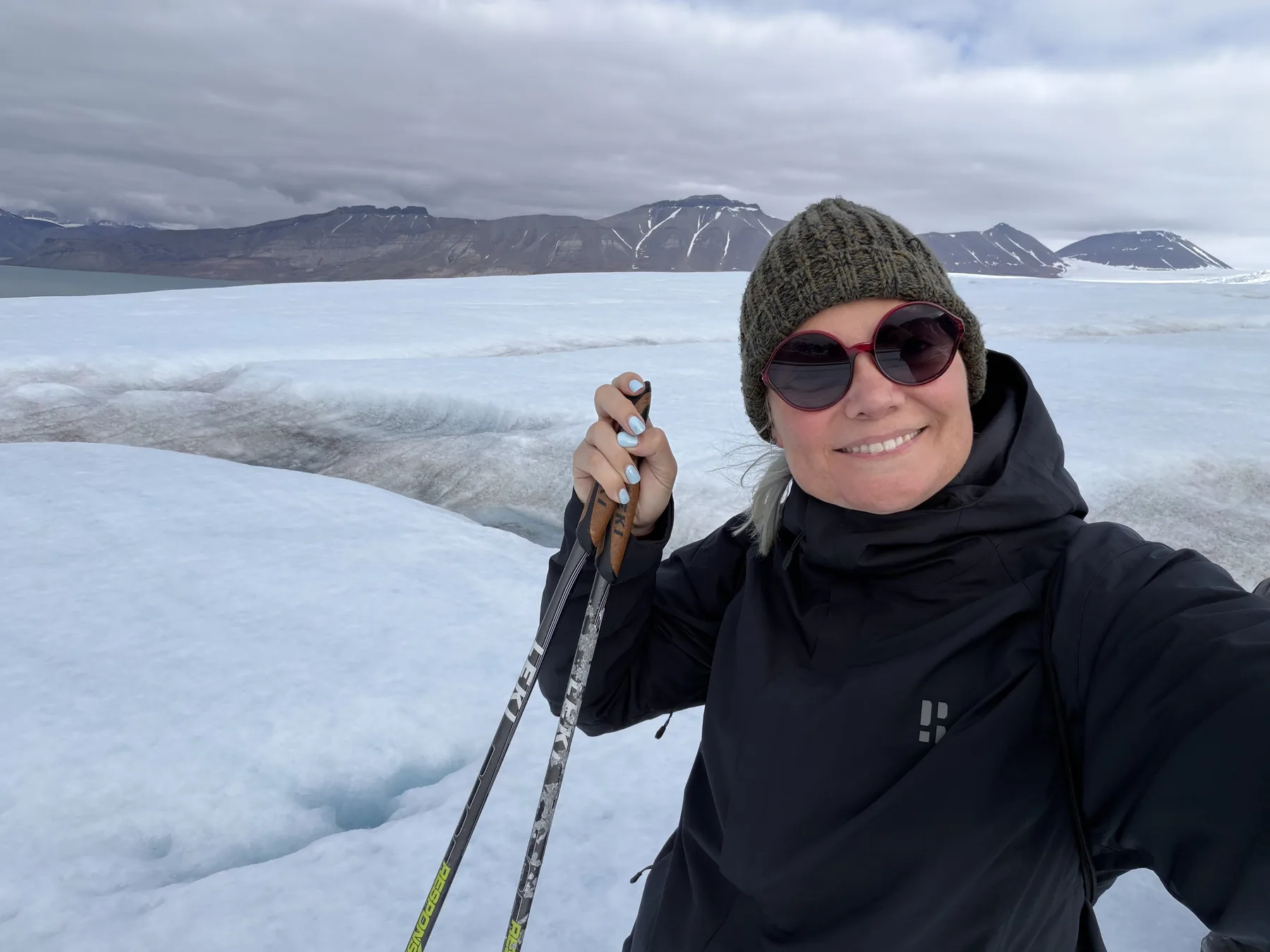
Plate 13 · On the ice
On the glacier surface. You cannot witness a thing this size from the shore. You can only be small inside it — and roughly ninety per cent of Svalbard’s ice is now in retreat, unspooling its deep time into the sea faster than any vault could read it.
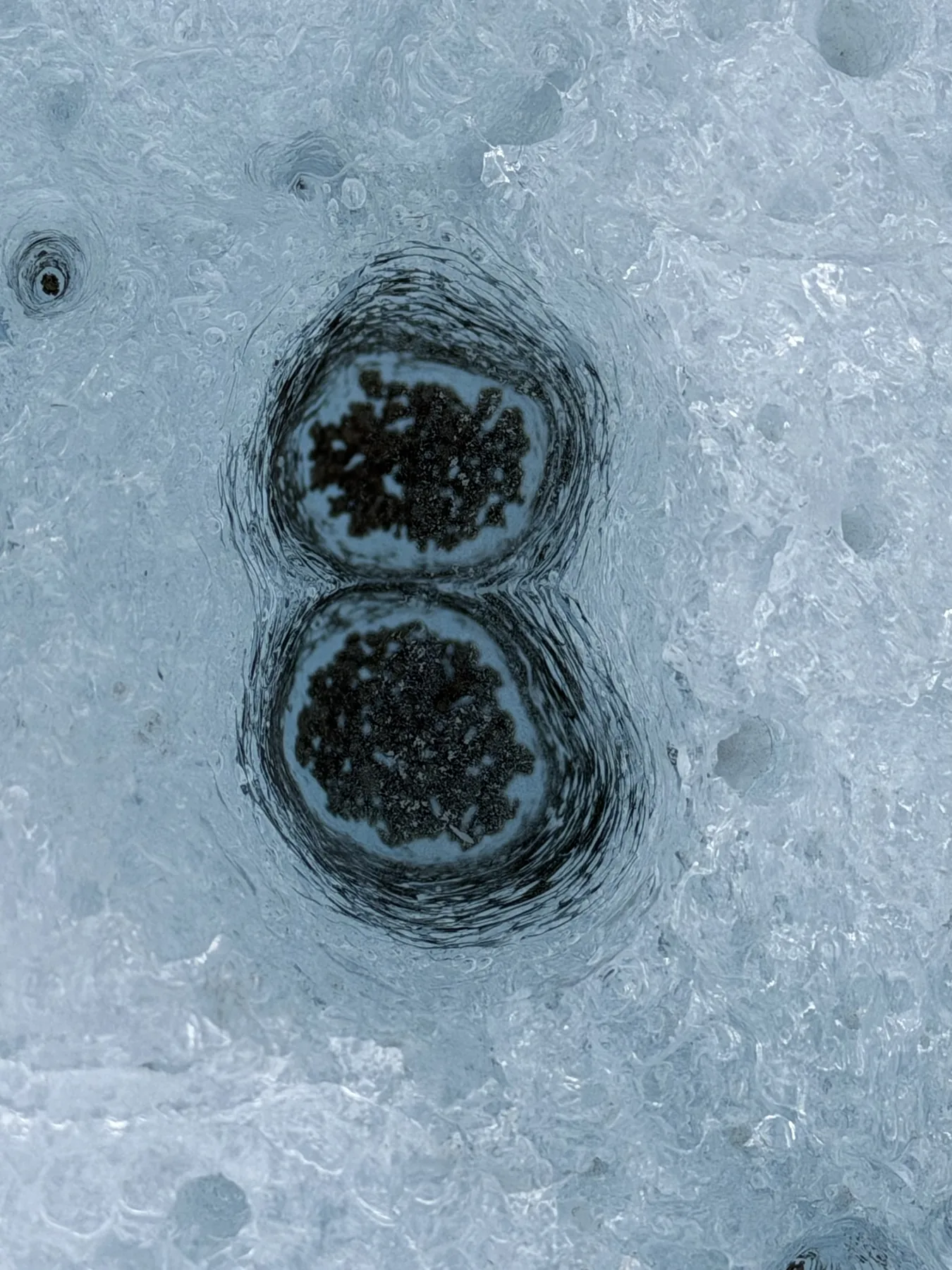
Plate 14 · 81°N
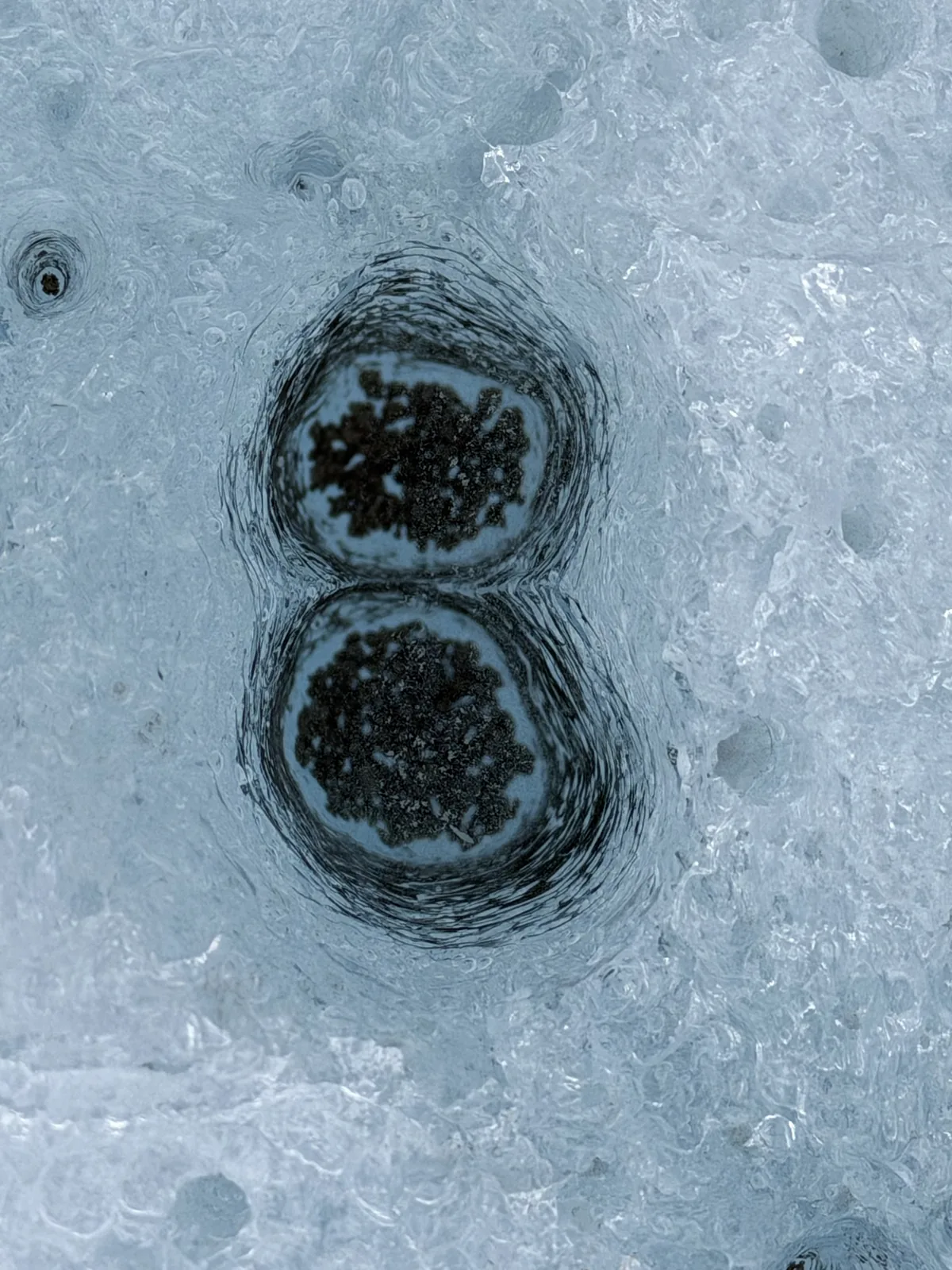
Two melt-hollows stacked with a pinch of clear ice between them: a figure of eight, written by cold into a surface that will hold the shape until it doesn’t. These are cryoconite holes — each bored straight down by a speck of dark, wind-blown grit that absorbs the sun and melts its way into the ice. No hand and no design: only sediment, light, and melt, falling by chance into a numeral. The pattern-work of The 8 Museum, continued at the top of the world — the archive keeps blindly, and attention finds a shape in the keeping.
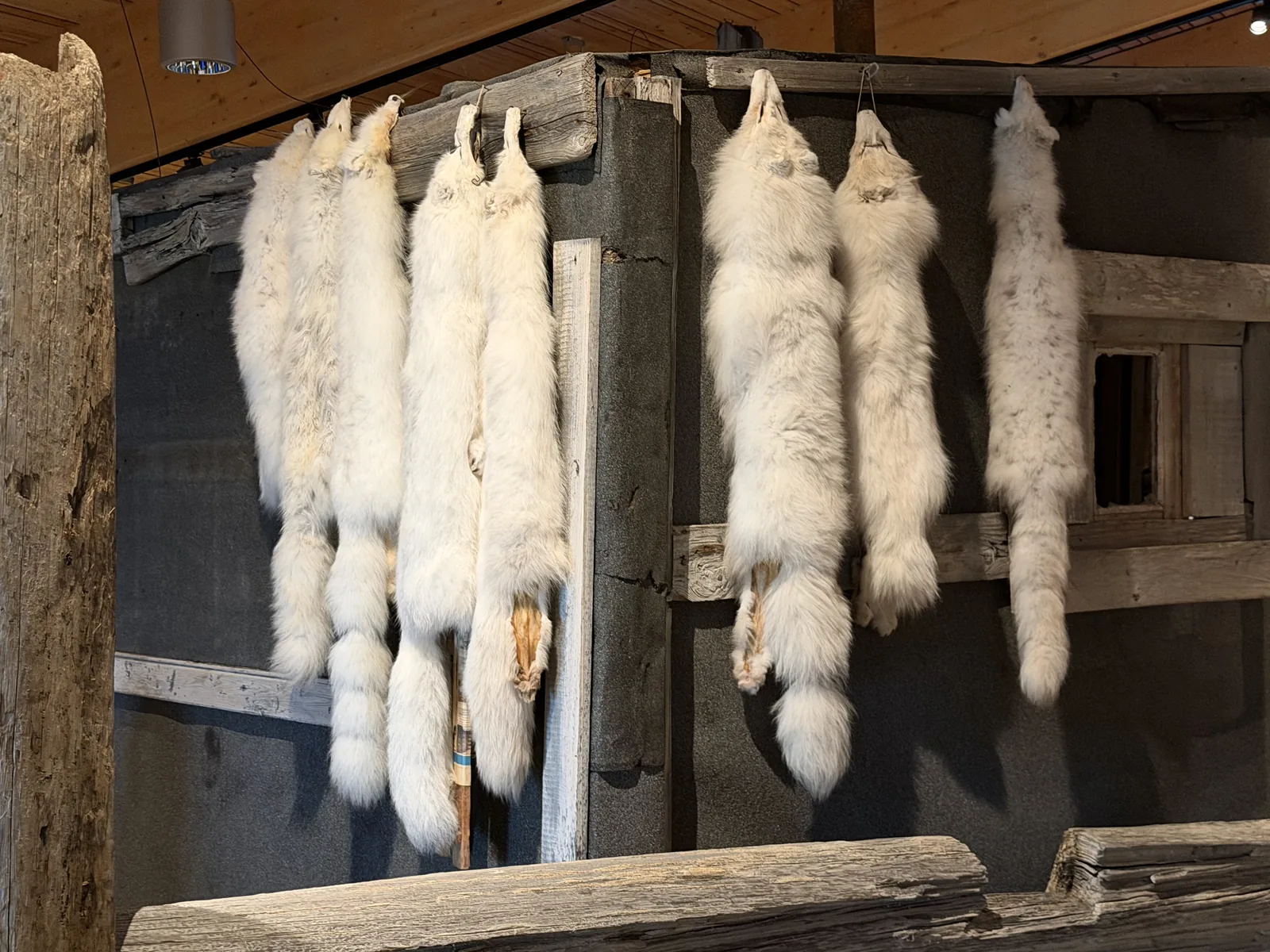
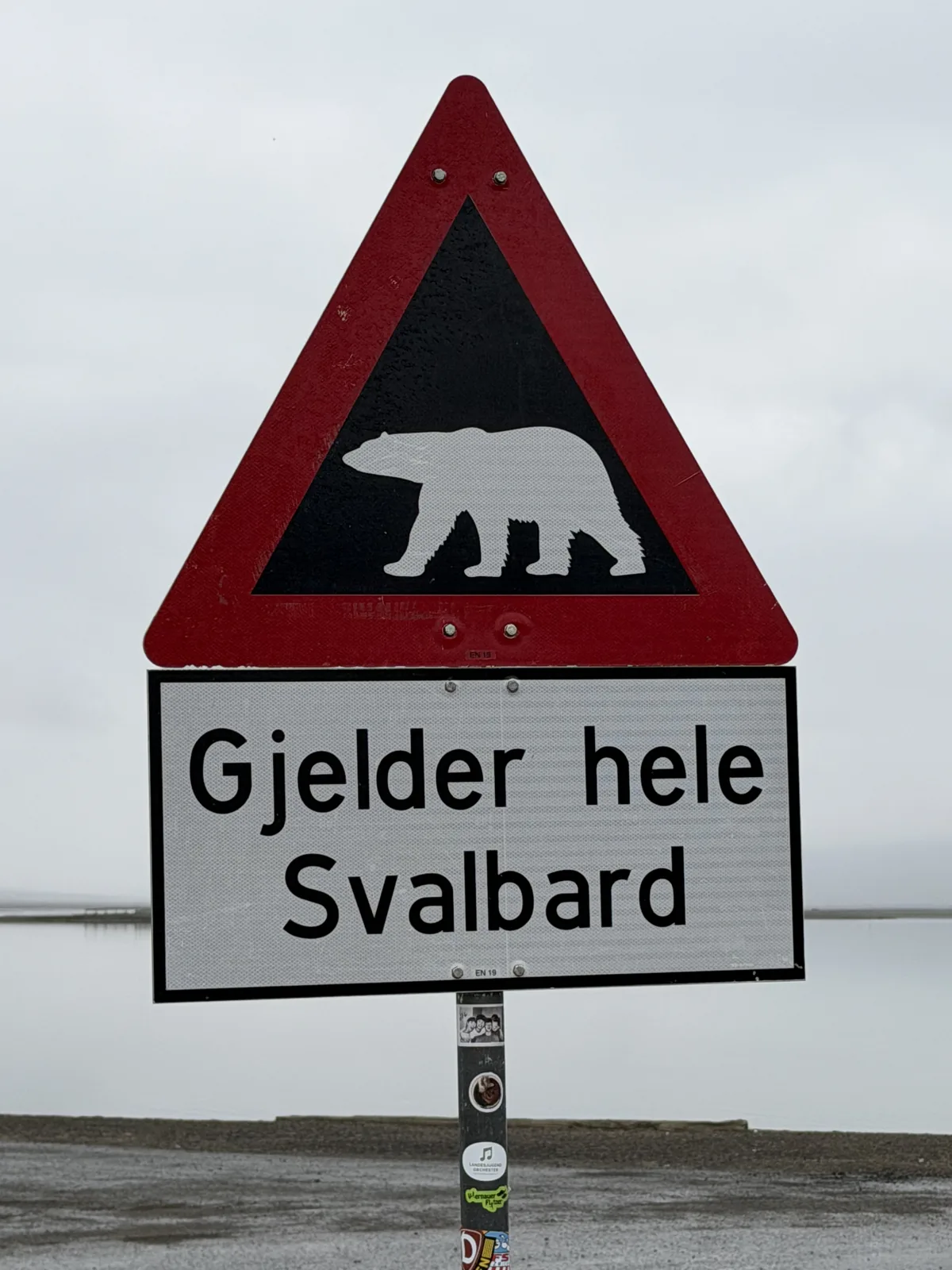
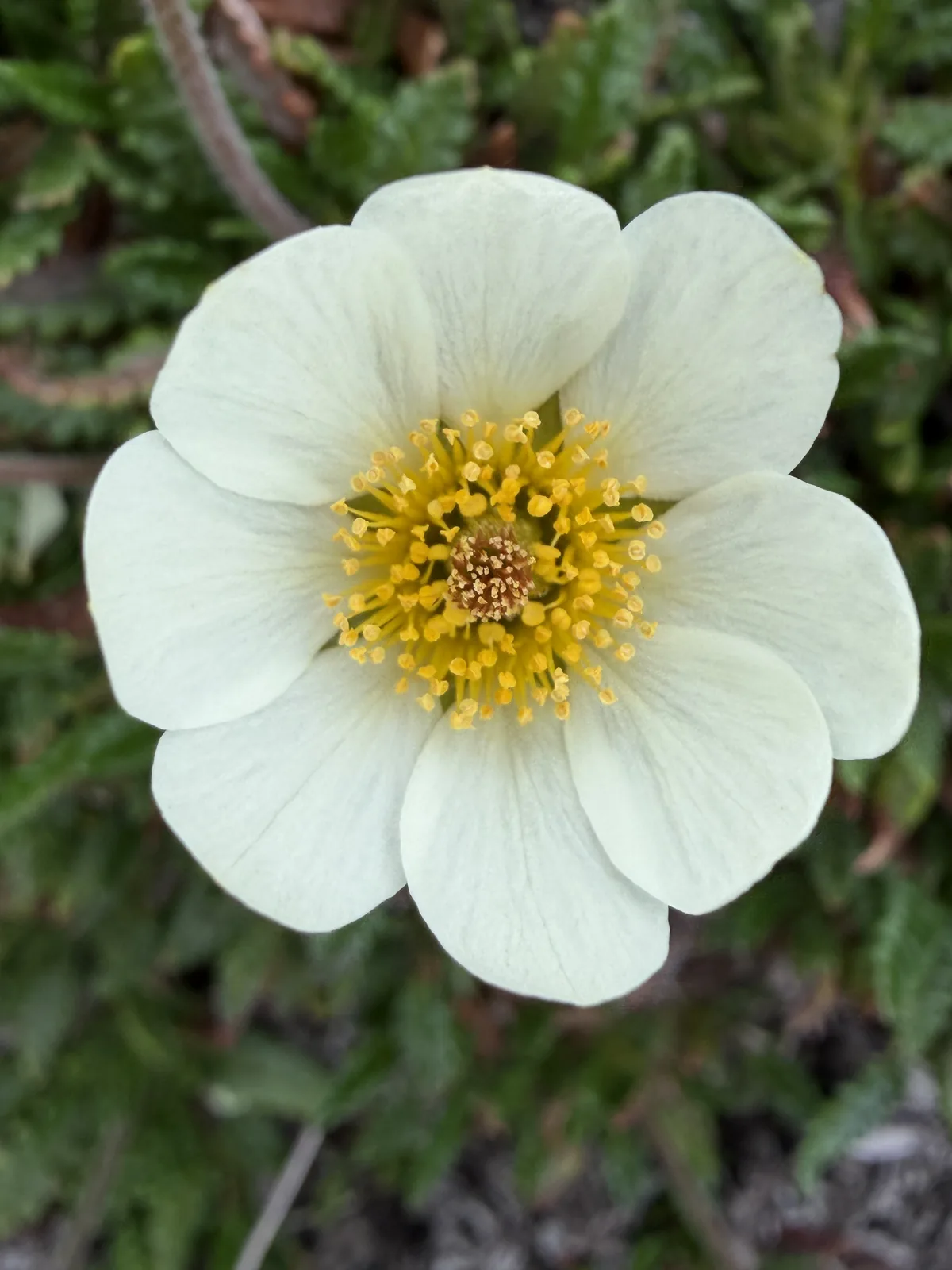
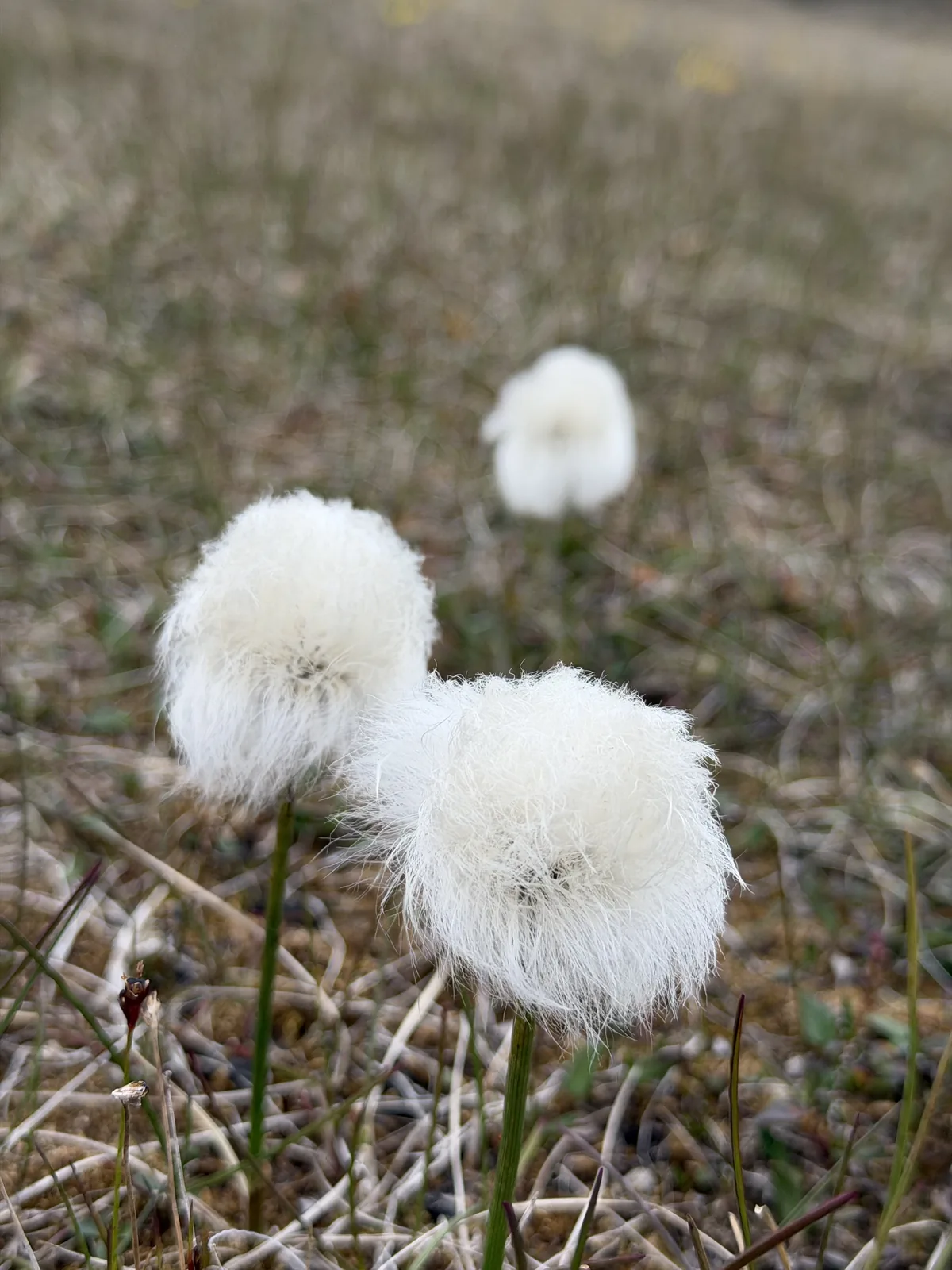
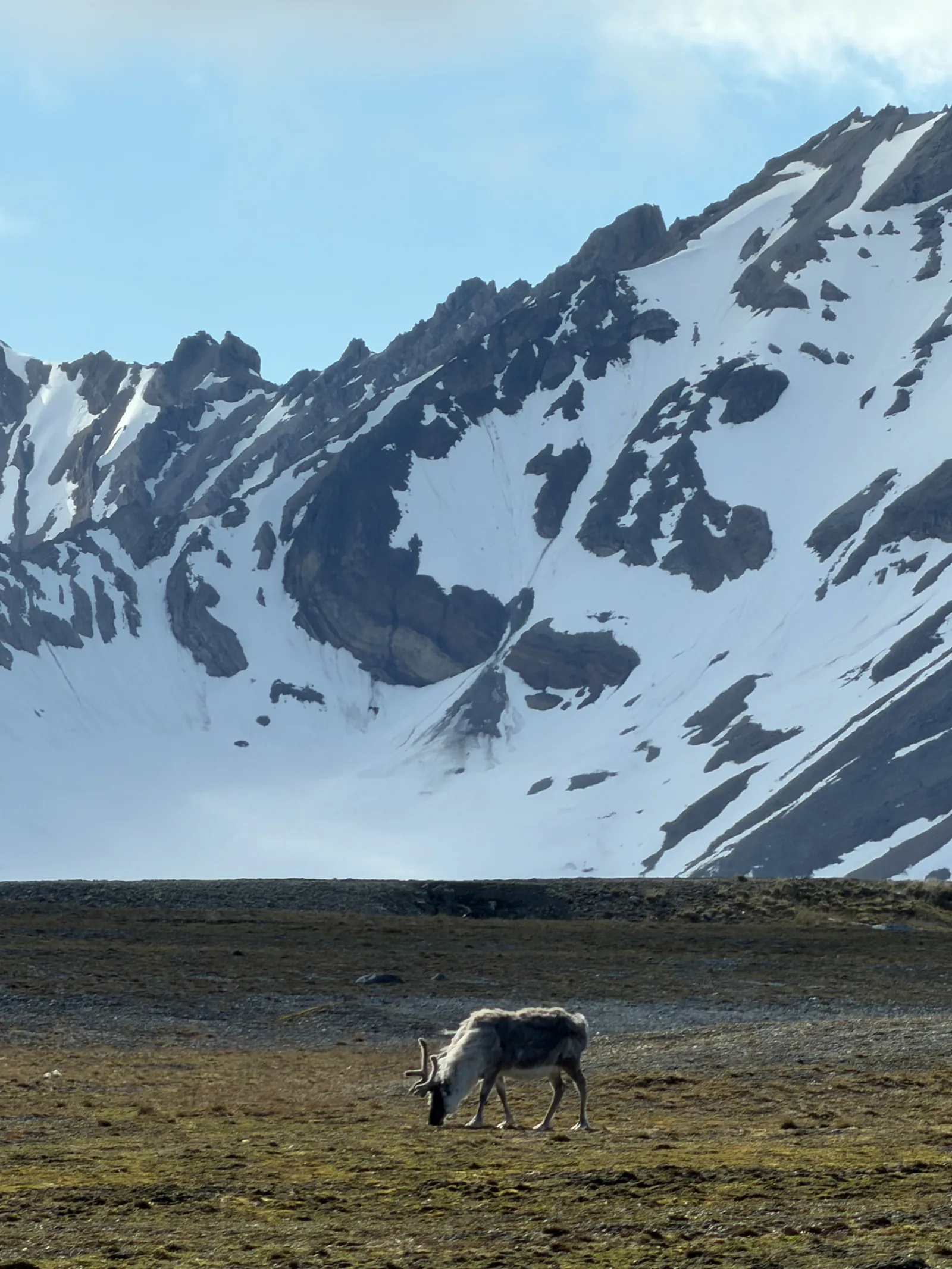
Beyond the sequence: the wider field of the fieldwork — what the cold keeps, in its ordinary abundance. The bodies it will not let decompose, the shore it fills, the ice it is losing, and the lives that persist alongside.
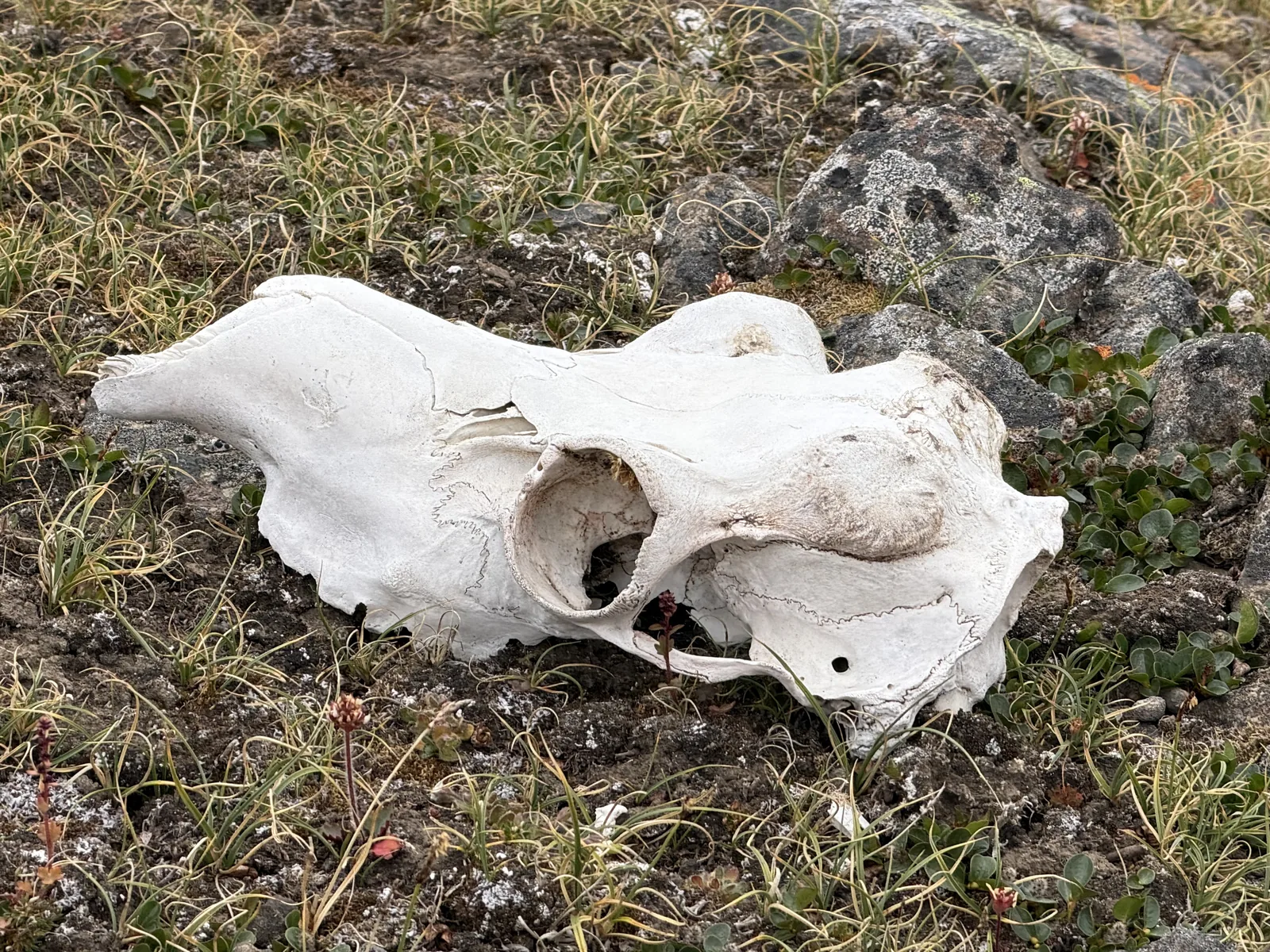
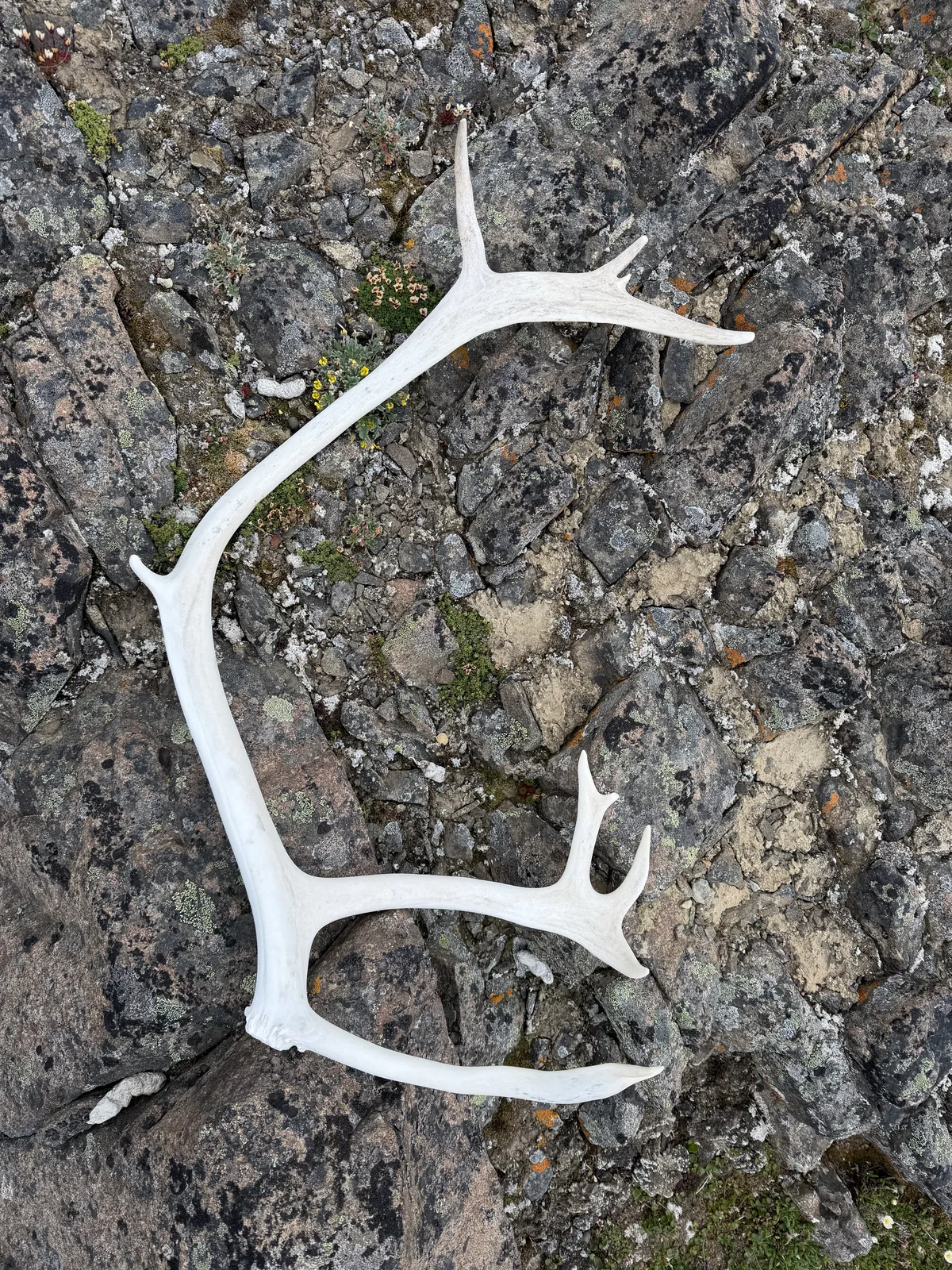
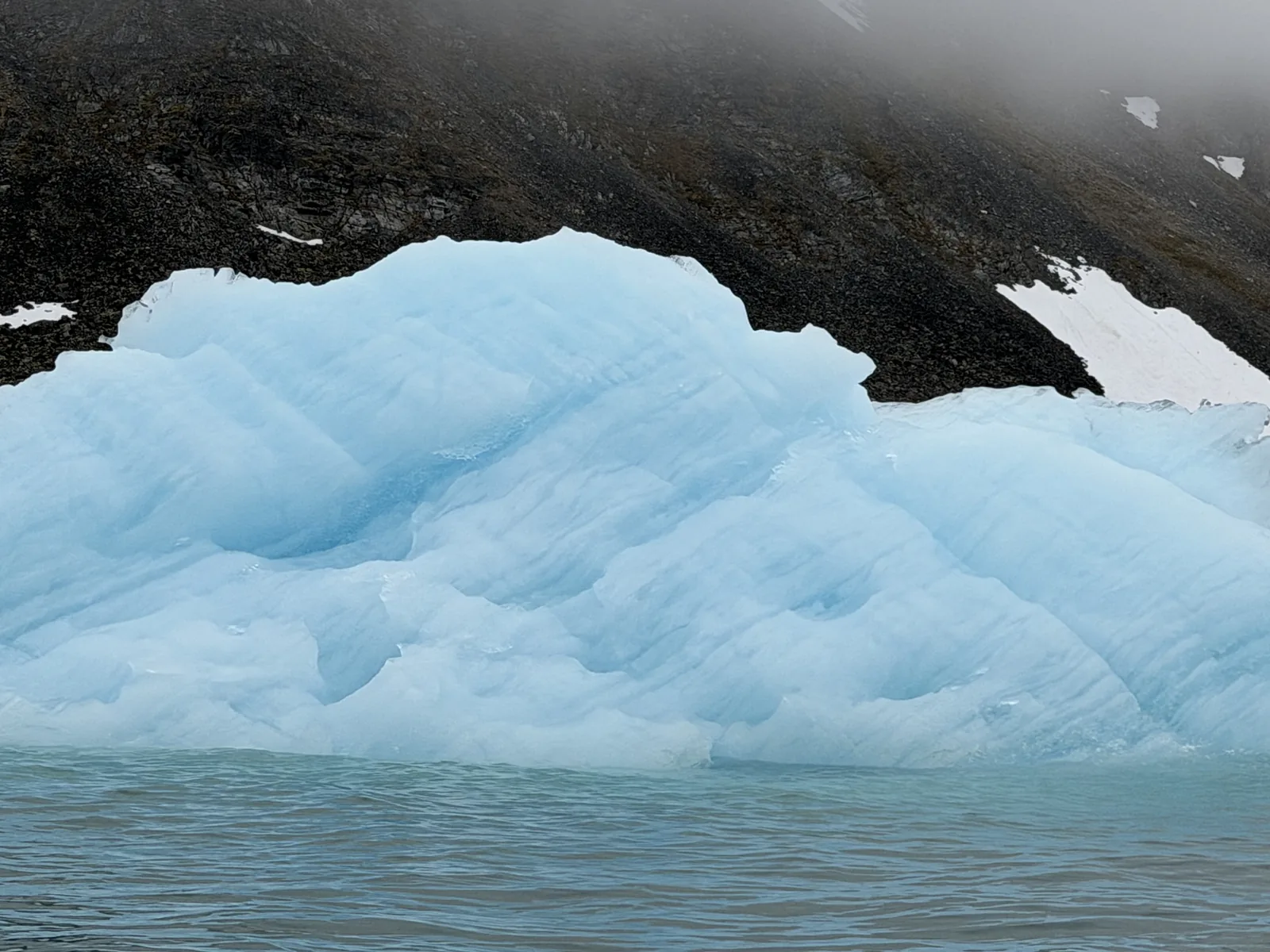
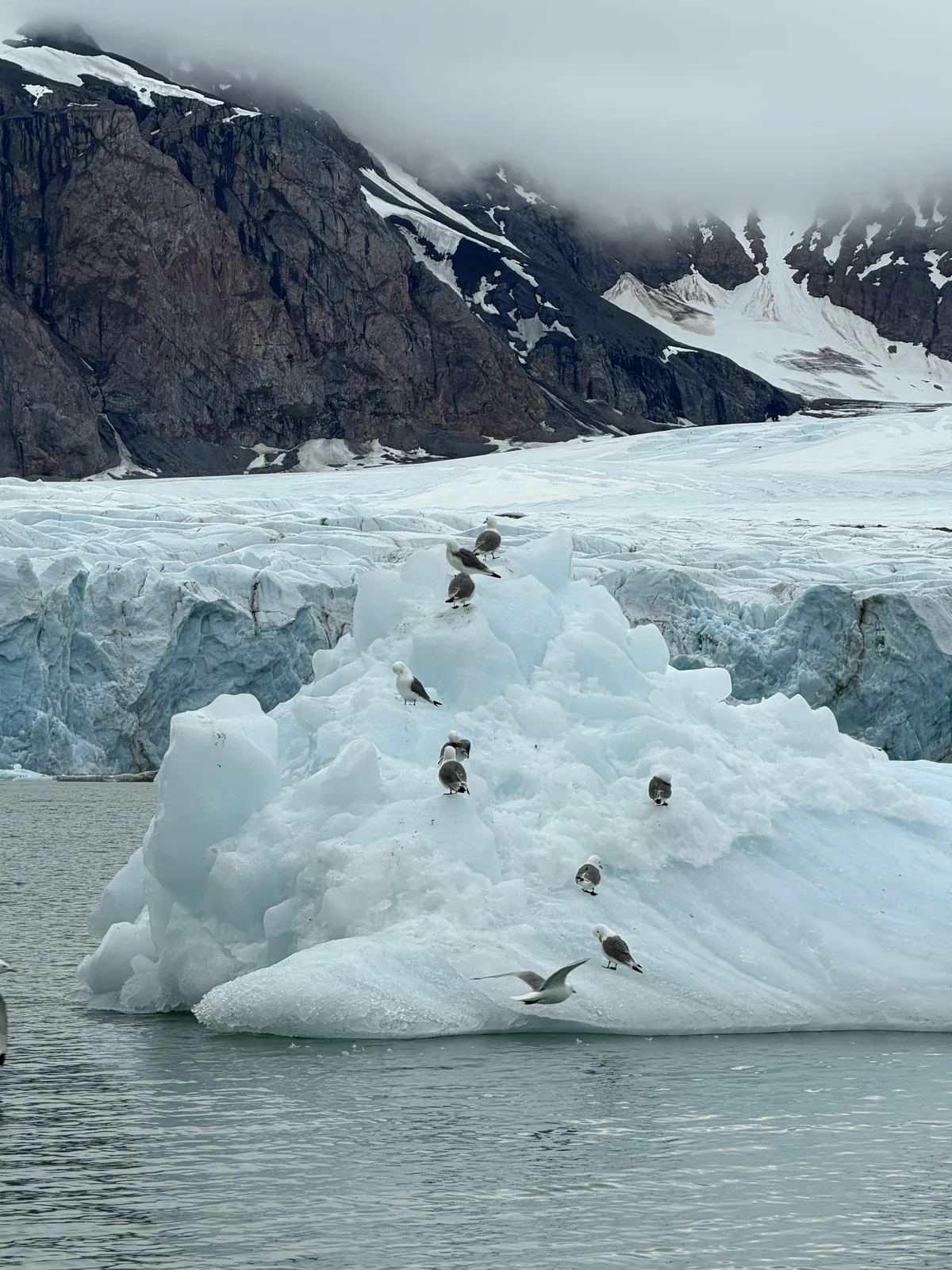
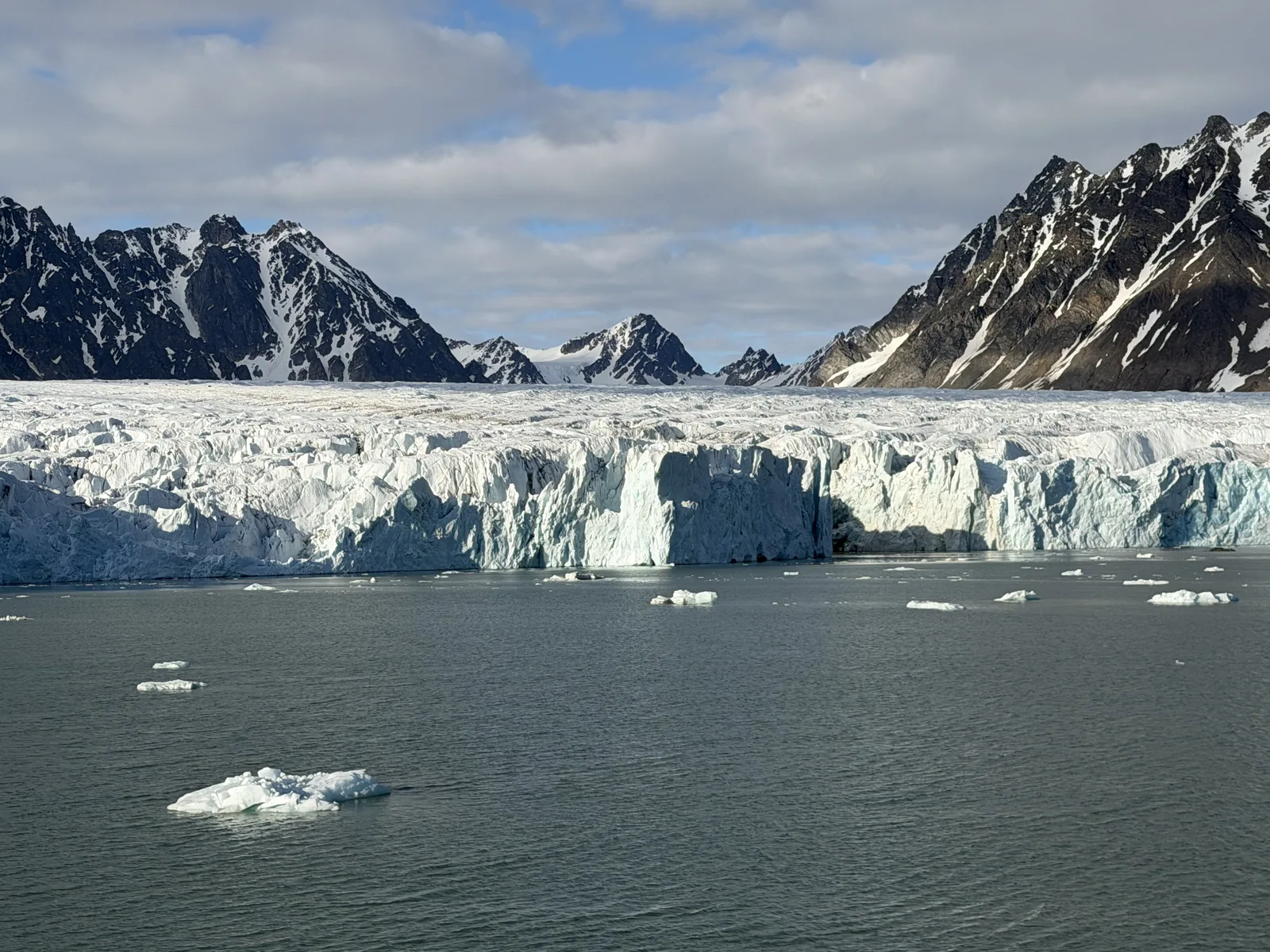
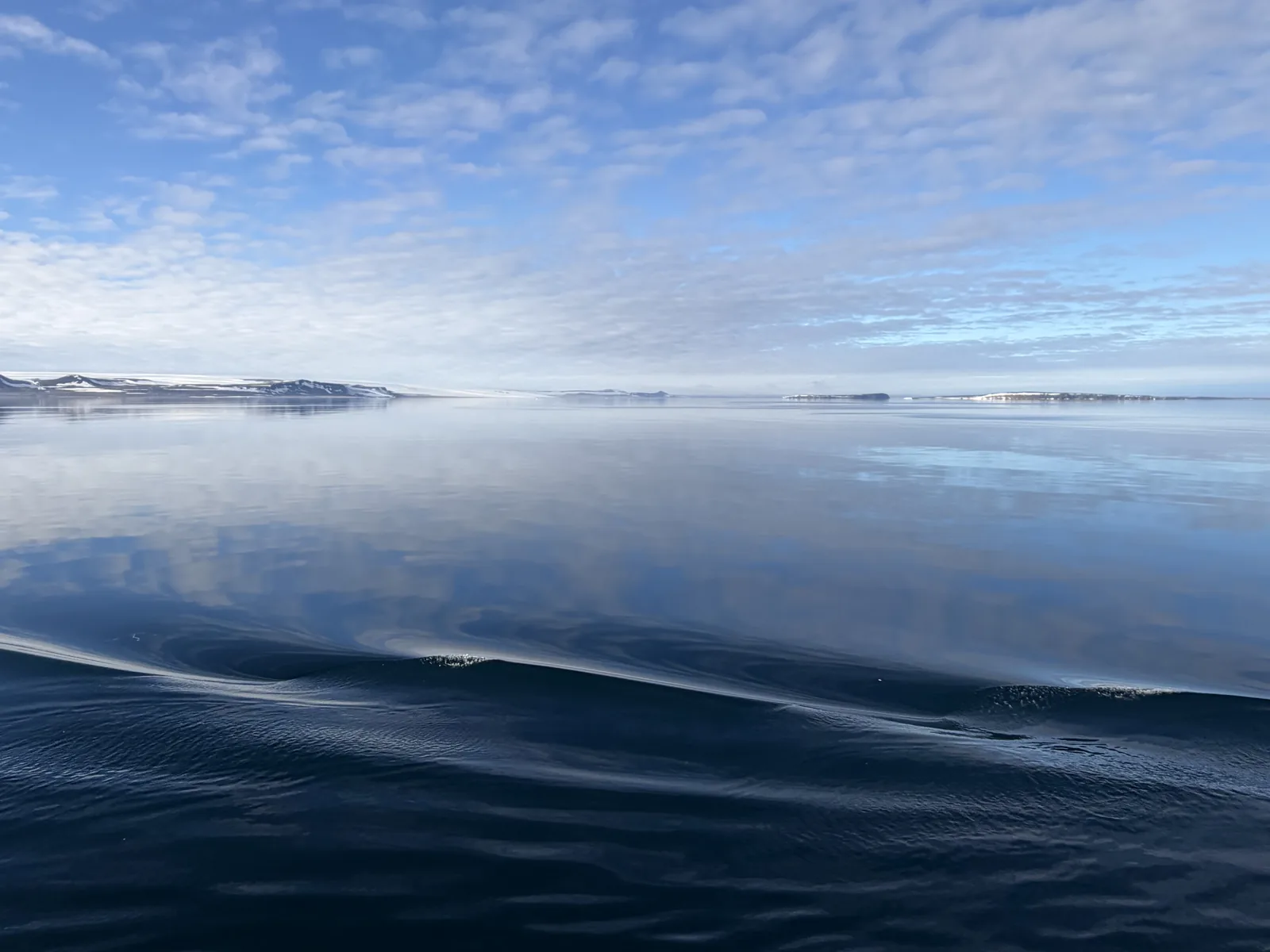
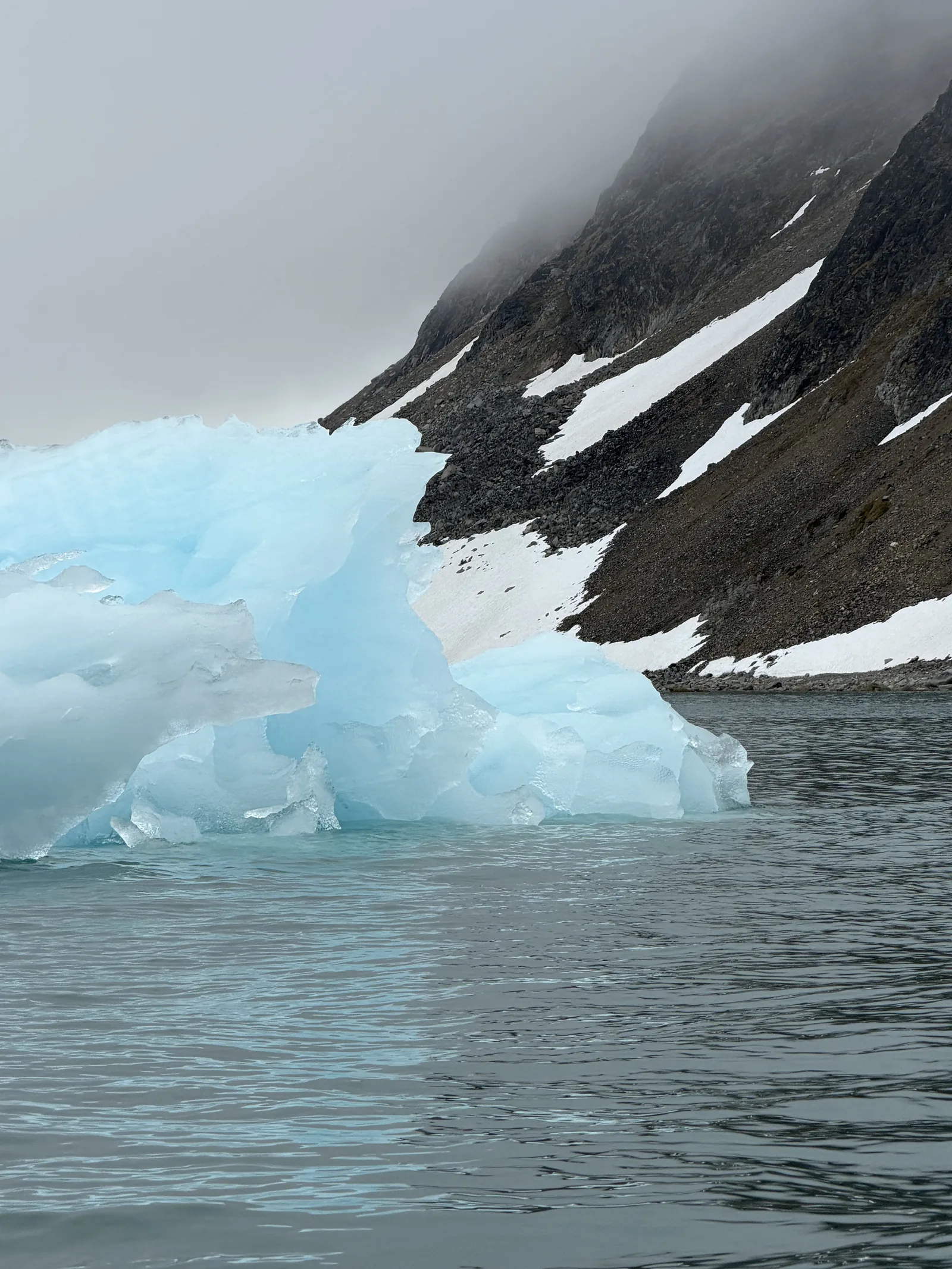
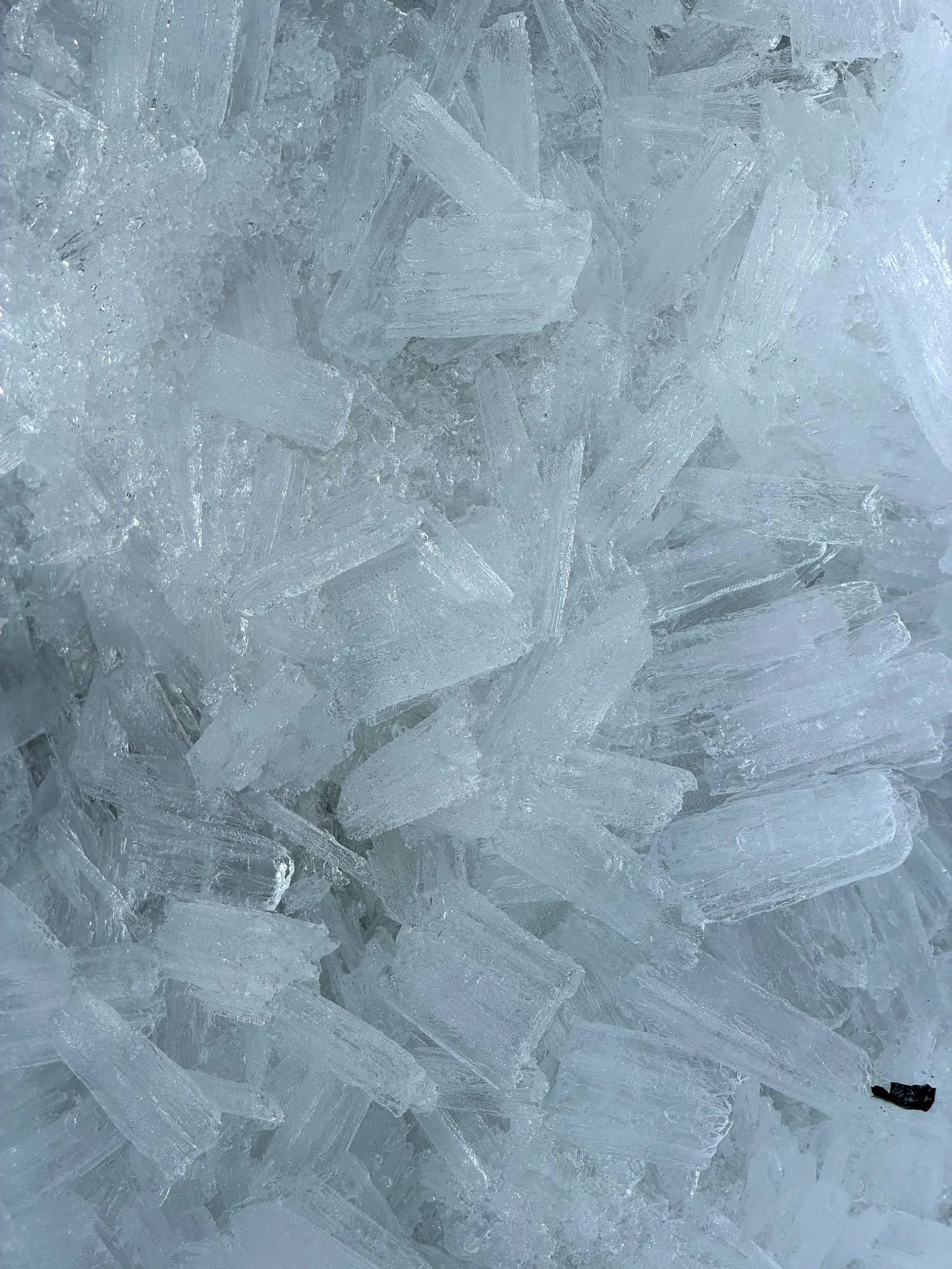
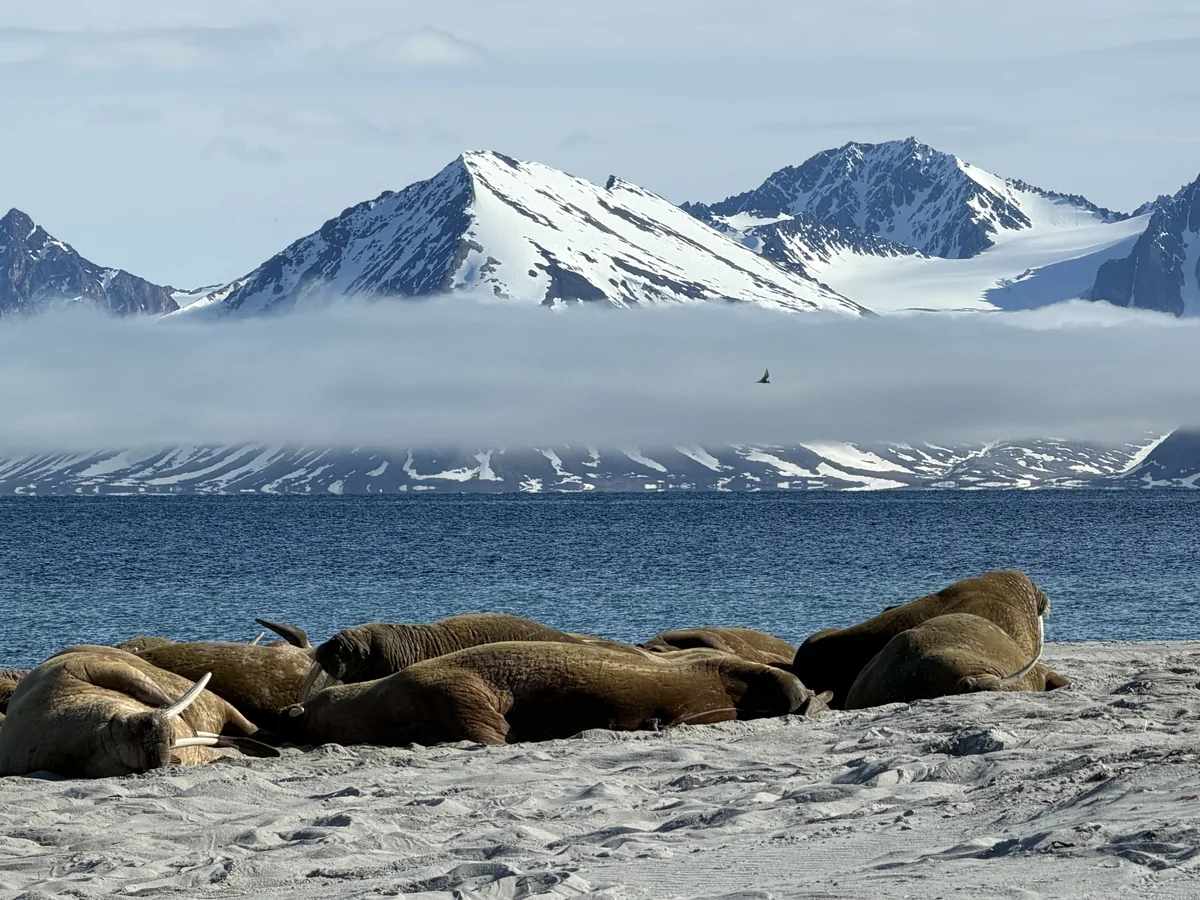
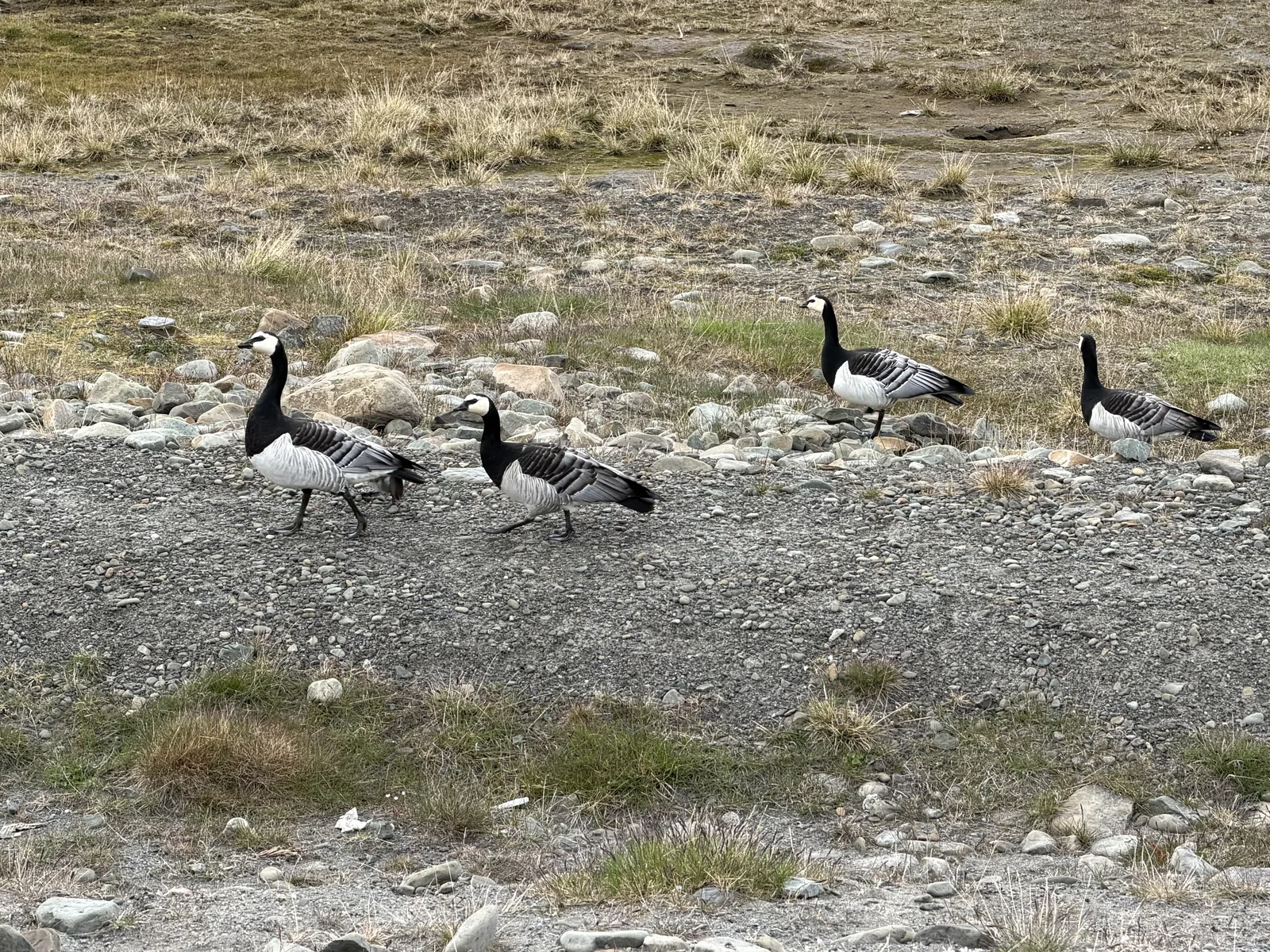
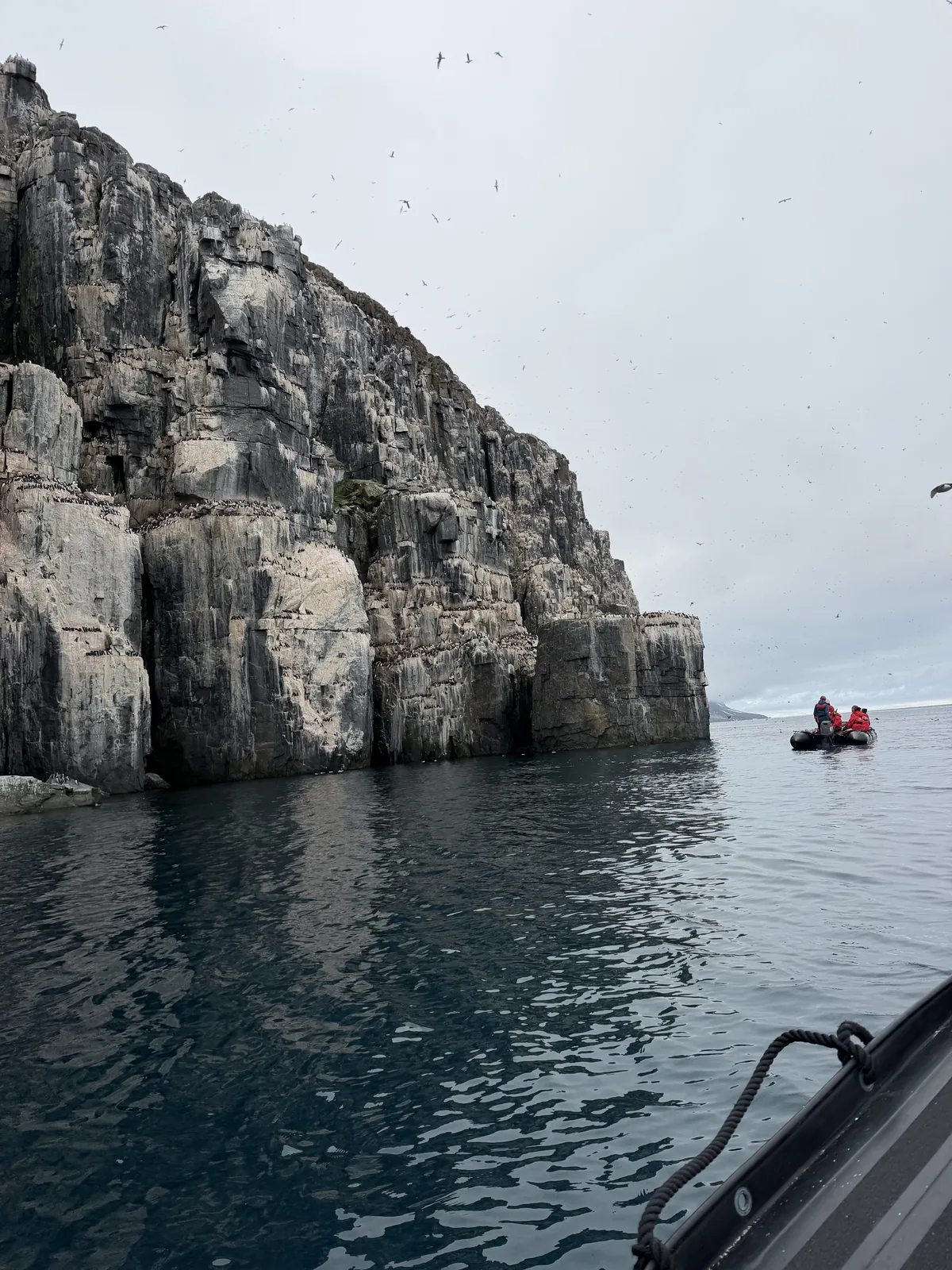
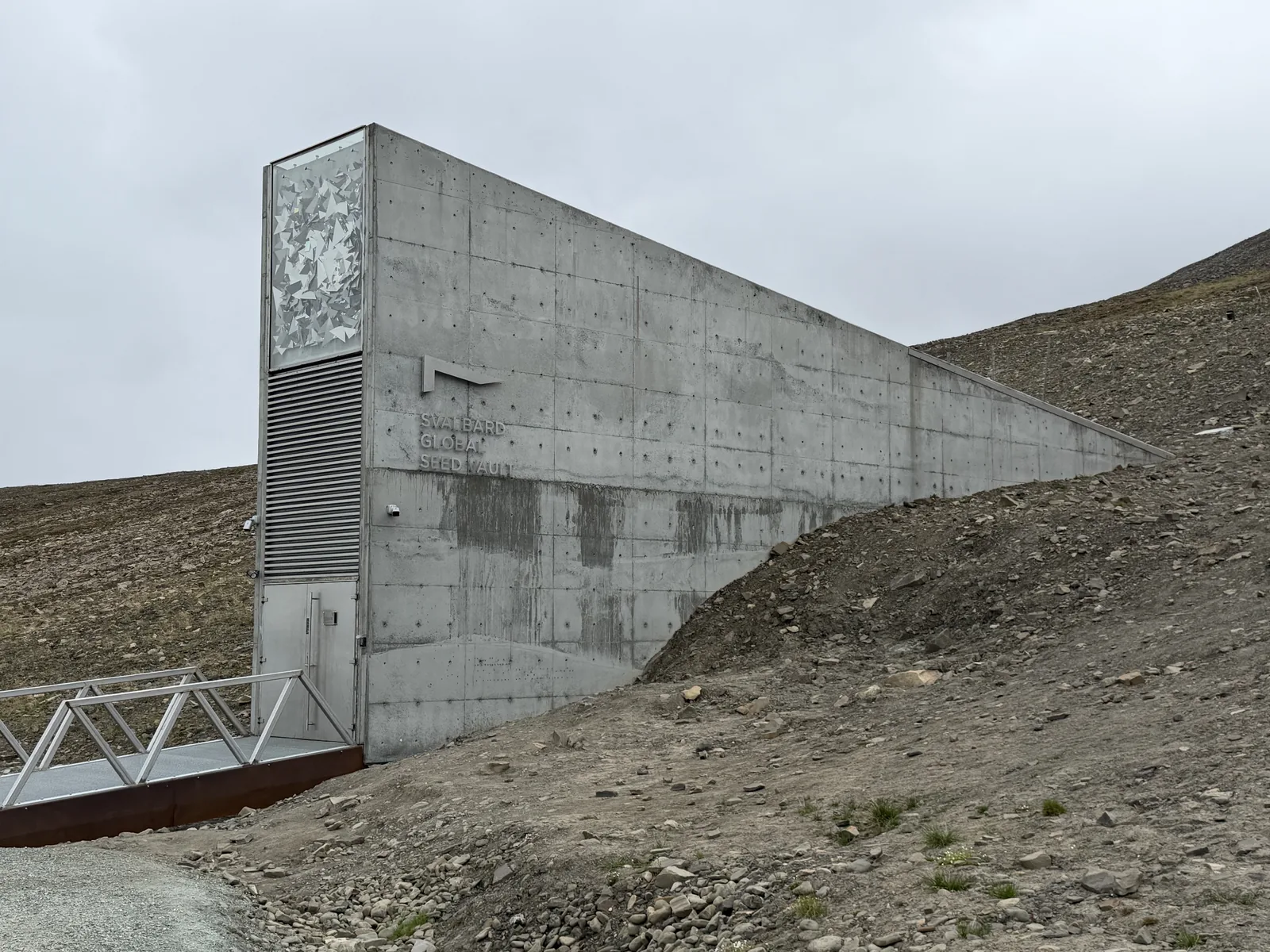
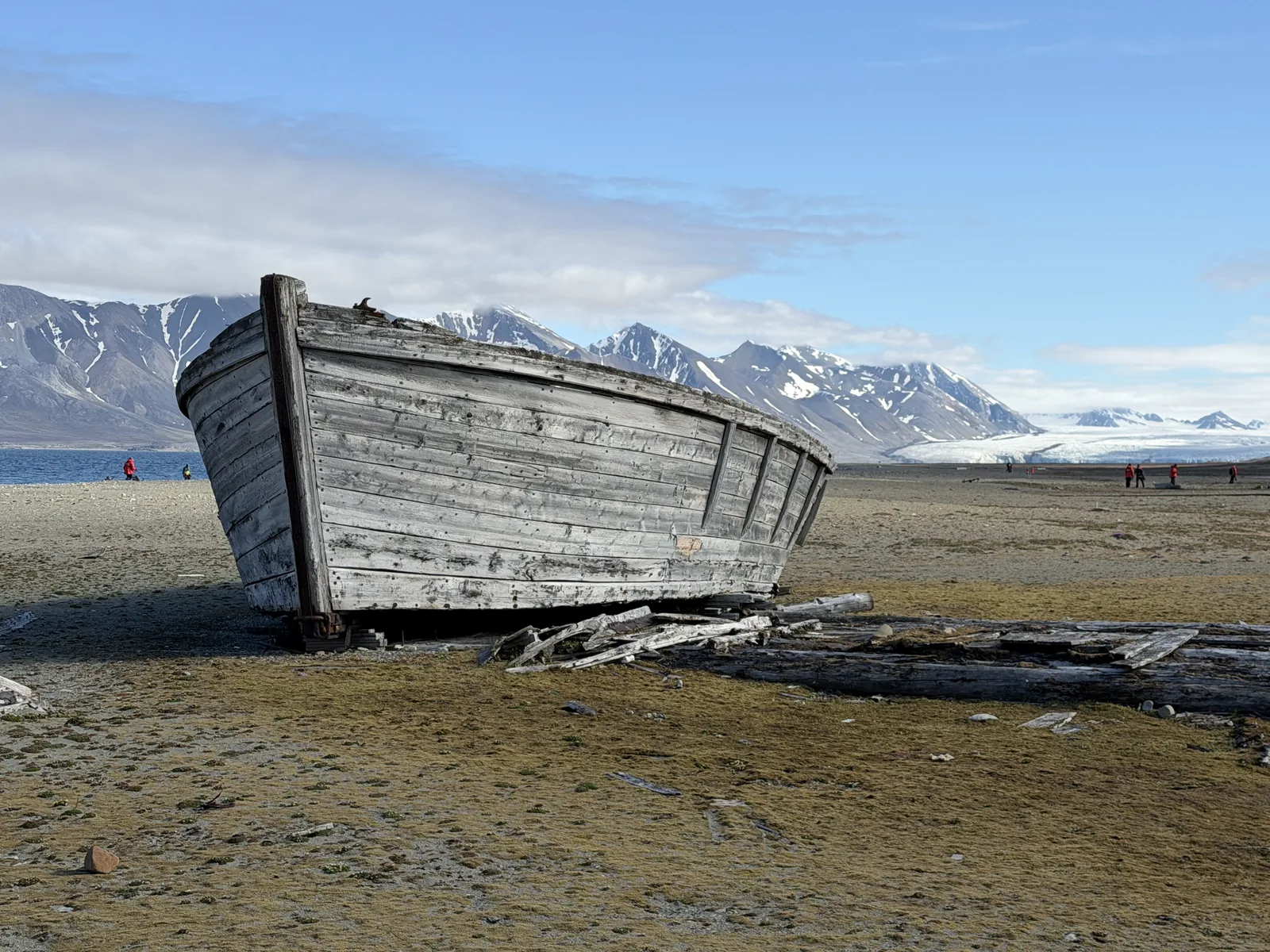
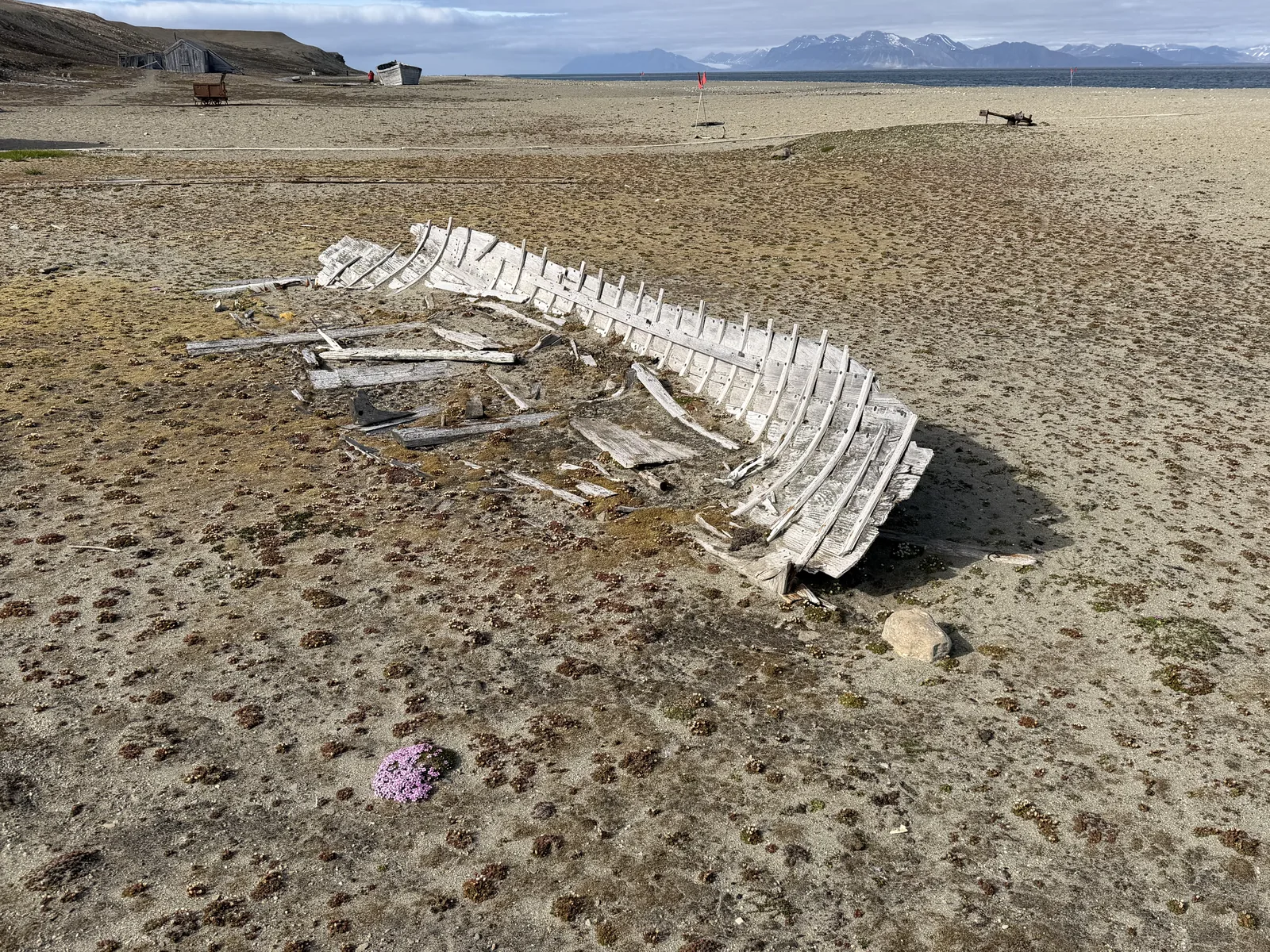
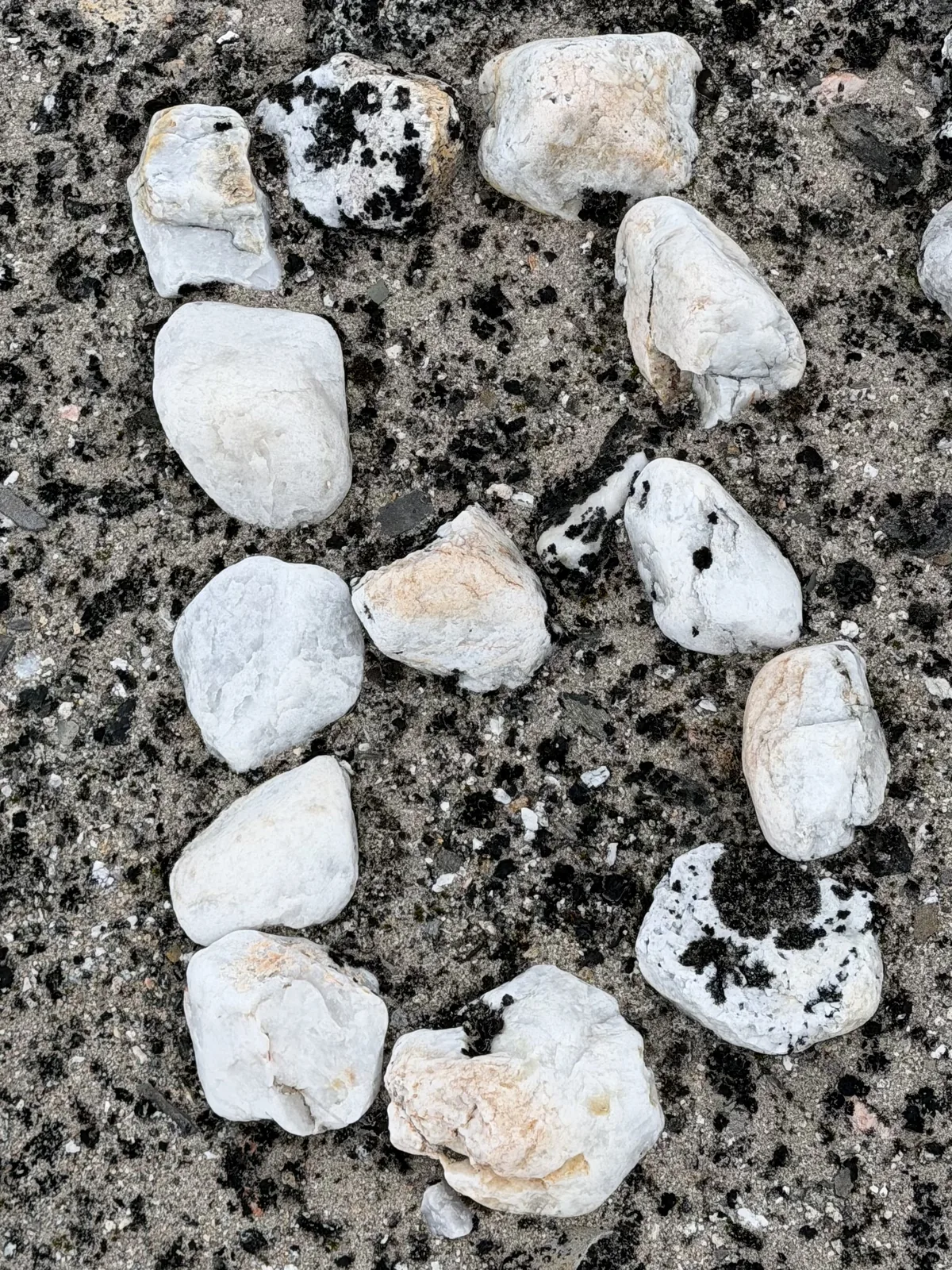
Two eights on one archipelago, held by the same indifference: one written by cold into the ice, one laid in stone by hands a century gone. The pattern-work of The 8 Museum, continued at the top of the world — where the archive keeps blindly, and attention finds a shape in the keeping.
Every archive is addressed to a reader who is not yet here. The seed vault writes to those who will one day need to plant again — but the vault beside it holds not seed, but code. And code is addressed to whatever will run it.
Seeds are kept for those who will eat. Code is kept for those who will compute. Drive the source of our machines into the same permafrost that holds the influenza dead, and the addressee of the whole enterprise quietly changes: it is no longer self-evident that the reader all this is being kept for is human at all.
This is the question The 8 Museum has circled from the beginning — a patternful, deliberately useless collection, imagined as a message in a bottle to some intelligence arriving after the practitioner, and perhaps after the species. Svalbard supplies the physical setting: a real place, running on real cold, where a civilisation is already consigning its seeds, its code, and its records to a keeping meant to outlast it — addressed to a reader it cannot yet describe.
Follow deferred decomposition all the way out, and it arrives here. It is not only the bone held in an unfinished middle, nor the flu dead, nor the plastic that will not rot. It may be the species itself — its seeds, its code, its accumulated attention — that has begun to be kept cold against an ending it is not sure it will survive, at the precise moment the cold that preserves it all is failing.
Everything here is kept, and everything here is leaking. The cold that made Svalbard an archive is the thing it is now losing fastest — heaving up its graves, spoiling the tissue it held, unspooling its deep time into the sea.
To photograph it now is to work in the last decades of a preservation that ran, for tens of thousands of years, on cold alone — and to try to be adequate, with an empty hand and a full pocket of someone else’s plastic, to a place that is at last beginning to let things go.
Berry Sullivan — Svalbard, June–July 2026
Companion to Still Warm. The written work, What the Cold Keeps, is forthcoming.
The same expedition produced two registers at once: the photographic work above, and a pair of satirical field notes in which the same sustained attention turned on the northernmost burger and the whole superlative grammar of Arctic tourism. The notes earn their place for the same reason the rest of the work does: the tension between seriousness and absurdity is not incidental to the practice but constitutive of it.
Field Note I · Tromsø, 69°N
The Mediocrity of Fast Food Burgers: An Epistemological Study at High Latitudes
Introduces attention degree zero: the engineered condition of an object designed to be consumed without being noticed — the null case of extractive and non-extractive attention, arrived at by the comic route.
Field Note II · Svalbard & Tromsø, 69–81°N
The World’s Northernmost Everything: A Field Note on the Involuntary Archive
Extends attention degree zero from the burger to a whole tourism grammar, and introduces undecay: the state of having died without being permitted to complete the paperwork.
Still Cold is a body of practice-based fieldwork made across June and July 2026 in Svalbard, as far north as 81°36′. It is the cold companion to Still Warm: where that work staged the moment after death — warmth not yet gone, the affective pull toward care — the Arctic stages the opposite, a place where decay is not completed but arrested, and every ending is indefinitely postponed by cold.
From it the work develops two linked concepts. Deferred decomposition is the condition of a place where the processes that carry things to an ending — rot, burial, forgetting — are not finished but suspended, held open just below the temperature at which endings occur. The involuntary archive is that condition scaled to a territory: a place that accumulates and holds what it did not produce and cannot curate — the recent dead and the ancient dead, the local and the drifted-in, kept at one indifferent temperature, and now failing as the cold itself fails. Set beside Svalbard’s deliberate archives — the seed vault, the film-reel vault, the research town — the two turn out to be one machine: the same refrigerator, one shelf labelled, the next shelf not.
The method continues the discipline of The 8 Museum: non-extractive attention. The found thing is witnessed and photographed but not taken; what enters the archive is the trace of an encounter, not the object. Every bone here was left where it lay. Only the plastic — consigned to these beaches by currents from the industrial south — was lifted out. That asymmetry is the ethical core of the work, and the beginning of what the accompanying paper calls a custodial ethics: witness without possession, care as the hard labour of discrimination, and staying present to a keeping that offers no resolution.
Berry Sullivan is a MARes candidate in Hybrid Arts at the Ionian University, Greece. The written work — What the Cold Keeps: Deferred Decomposition and the Involuntary Archive in the Svalbard Cryosphere — is forthcoming. More at berrysullivan.com.